

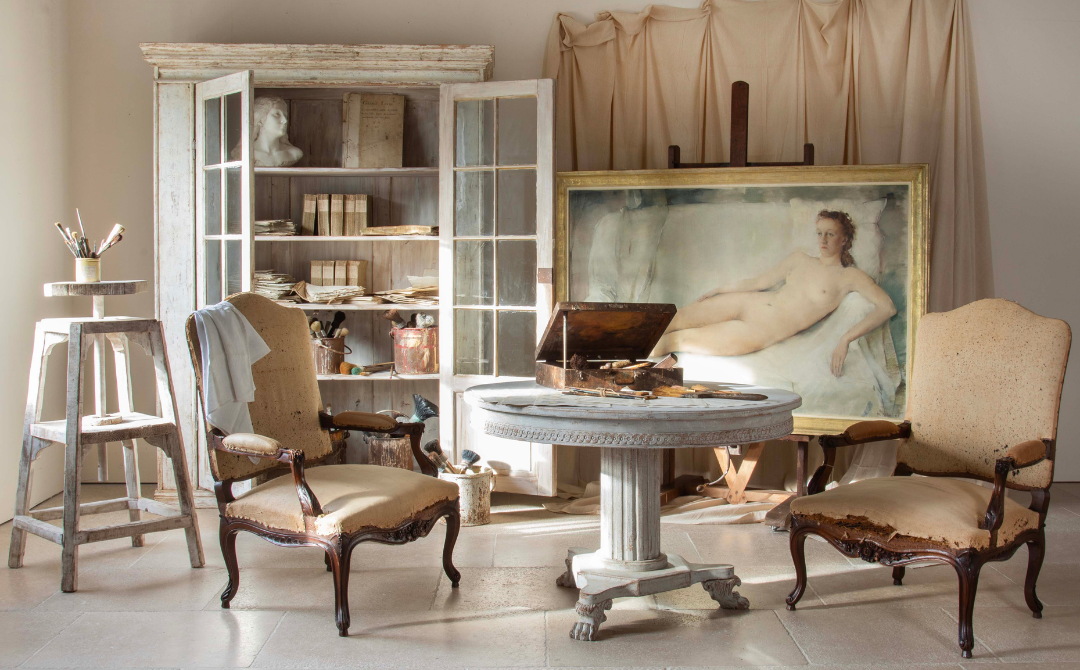
Walk through any major antiques fair, browse the inventory of a respected dealer, or read the description of an exceptional French fauteuil, and a pattern emerges quickly. Louis XIV. Louis XV. Louis XVI.
The names appear so often that, for many, they start to blur together becoming shorthand for ‘French antique’ rather than three distinct style designations, each tied to a specific reign. For designers, those differences are worth knowing. They shape sourcing decisions, influence how furniture relates to architecture, and help determine whether a single piece brings quiet elegance, dramatic presence, or a sense of luxury to a room.
Interior designer Alexa Hampton has spoken about the enduring role of classical design in contemporary interiors, and her point is a useful one for anyone sourcing period furniture. Historical literacy gives designers a richer vocabulary to work with. History becomes a resource for reinterpretation.
The three Louis styles are among the clearest examples of that idea. They developed across approximately 150 years, and each one reflects a different way of thinking about furniture, decoration, and daily life. Learning to tell them apart helps to sharpen your eye and ultimately makes you a more discerning buyer.
One clarification worth making up front: each of these names can describe either a period or a style. A Louis XV-period piece was made during the reign itself. A Louis XV-style piece was made later, sometimes a century later, in that aesthetic. Both can be well made and valuable. They are not the same purchase.
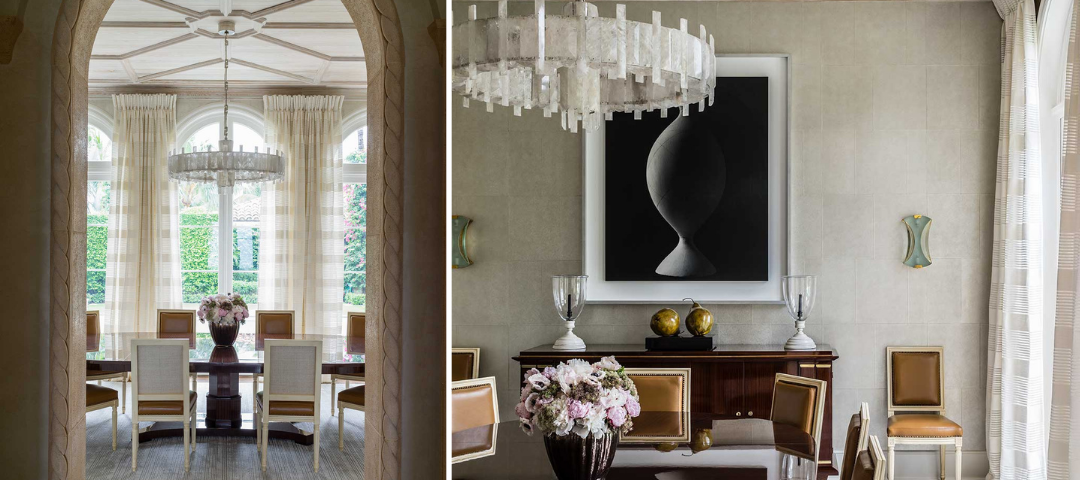
Interiors by David Kleinberg Design Associates. Photos by James Merrell.
Three Kings, Three Very Different Ideas of Beauty
French furniture changed dramatically between the mid-seventeenth and late eighteenth centuries, mirroring royal dictates and the shifts in politics, architecture, philosophy, and society that came with them. The style associated with Louis XIV tended toward monumentality, symmetry, and richly worked surfaces. Under Louis XV, forms grew increasingly fluid and intimate, shaped by the Rococo sensibility. By the Louis XVI period, Neoclassicism brought renewed emphasis on symmetry, straighter lines, and classical ornament.
Those shifts still shape interiors today because they answer questions designers continue to ask: Should a room feel grand or intimate? Formal or relaxed? Architectural or decorative? The Louis styles offer a remarkably useful framework for working through these questions.
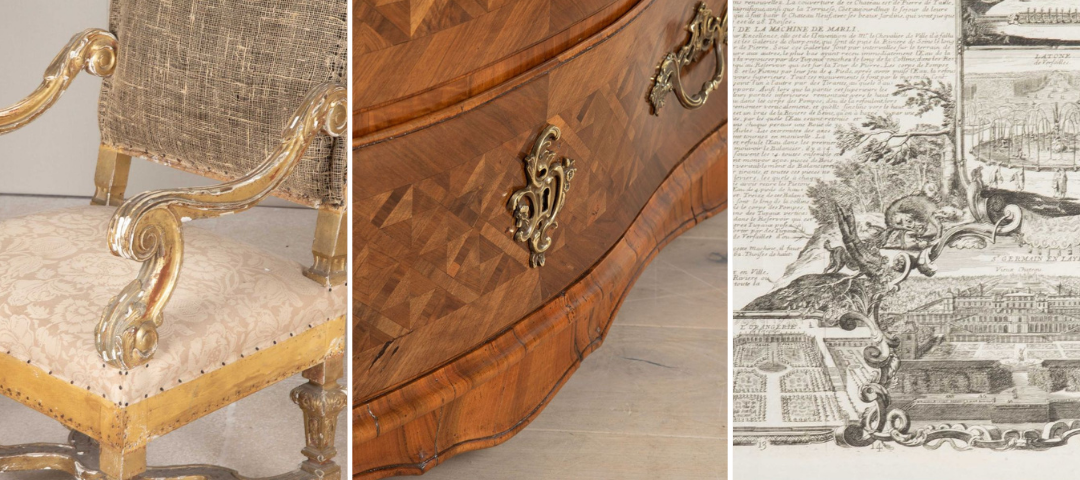
Images courtesy of Lorfords.
Louis XIV: Furniture with Presence
The reign of Louis XIV sparked one of the most ambitious building campaigns in European history. Versailles became the center of autocratic rule and artistic production, and furniture followed the same monumental vision as the palace itself. Cabinets were imposing. Tables were richly ornamented. Gilt bronze, intricate marquetry, and bold symmetry communicated permanence and prestige.
Few designers today set out to recreate a full Louis XIV interior. They borrow its confidence instead. A single monumental cabinet, console, or mirror can anchor a contemporary room because it carries an architectural quality that commands respect for its artistic value. These pieces establish grandeur, scale, and visual hierarchy. They hold a room rather than settle into it.
Part of the enduring appeal of Louis XIV comes down to how few such pieces have survived, but the larger part is the extraordinary craftsmanship behind it. Cabinetmakers, bronze workers, and sculptors had always worked in separately, but Louis XIV’s reign formalized their collaboration for the first time. In 1662, his minister Colbert established the Gobelins manufactory, bringing these artisans together under one roof to produce furniture from unified royal designs.
Understanding those layers of workmanship transforms the way collectors and designers experience the furniture itself.
Régence: The Hinge Between Two Worlds
Between Louis XIV’s death in 1715 and Louis XV’s assumption of full power in 1723, France was governed by a regent, Philippe II, Duke of Orléans. Furniture from this transitional decade, now known as Régence, softened the rigid symmetry of the Sun King’s court without yet giving in to full Rococo curve. The cabriole leg appears for the first time, scale relaxes, and ornament softens. But an underlying discipline still holds the piece together.
For dealers, Régence pieces are worth knowing on their own terms. They are frequently miscatalogued as early Louis XV, when in fact their rarity and transitional character often make them more distinctive, and more valuable, than that label suggests.
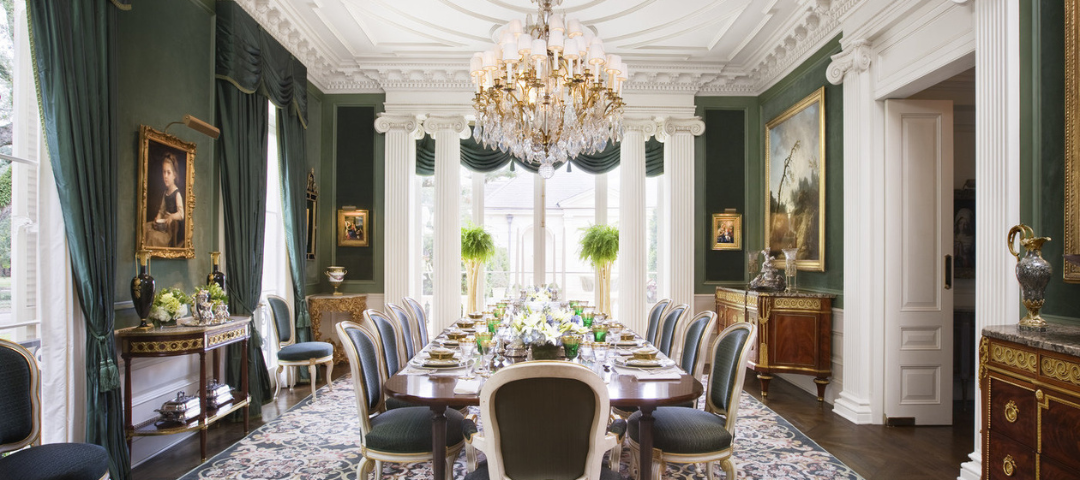
Interior Design by Alexa Hampton / Mark Hampton Interiors.
Louis XV: The Triumph of the Curve
Louis XIV furniture asserted architecture. Under Louis XV, that emphasis loosened, and furniture began answering to people instead: how they gathered, how they relaxed, and how a room actually felt to sit in.
As aristocratic life shifted from Versailles to Paris with its smaller salons and private gatherings, furniture became softer, lighter, and more comfortable. Straight lines gave way to flowing curves. Cabriole legs replaced rigid supports. Ornament drew inspiration from shells, foliage, and the natural world.
For many contemporary designers, Louis XV remains the most versatile of the three styles, because its soft lines and curved silhouettes sit so easily alongside modern interiors. A Louis XV bergère softens an otherwise tailored room. A serpentine commode introduces visual movement beneath contemporary artwork. Even a single carved chair can temper the crisp geometry of modern architecture.
The appeal here is contrast. These pieces remind us that a room becomes more inviting when its silhouettes are allowed to curve.
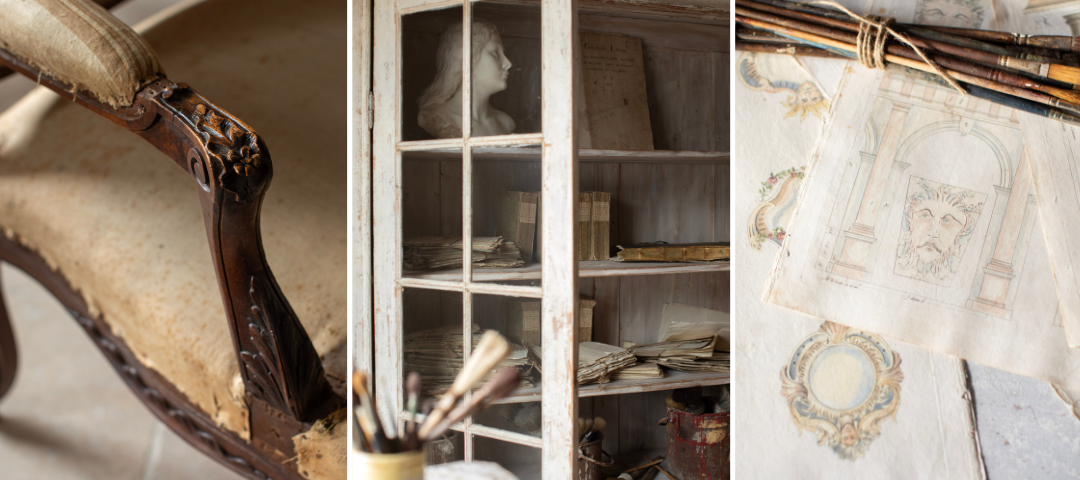
Images courtesy of Lorfords.
Louis XVI: A Return to Classical Antiquity
By the 1770s, another transformation was underway. Decades of archaeological discovery at Pompeii and Herculaneum had steadily reshaped how France understood the classical world, and by this point that influence was fully reordering French furniture. Ornament became more restrained. Legs straightened once again and were often fluted. Laurel wreaths, urns, and delicate geometric motifs replaced the exuberant asymmetry of Rococo.
To modern eyes, Louis XVI often feels surprisingly familiar. Its emphasis on proportion, symmetry, and architectural clarity aligns naturally with contemporary interiors. Paired with minimalist upholstery, abstract art, or traditional millwork, Louis XVI furniture has an adaptability that has kept it relevant for centuries.
That adaptability is the reason it keeps appearing in projects that otherwise feel entirely of the moment. Designers can use the underlying principles of proportion, symmetry, and clarity, and create spaces that feel balanced and layered without reproducing a historical room.
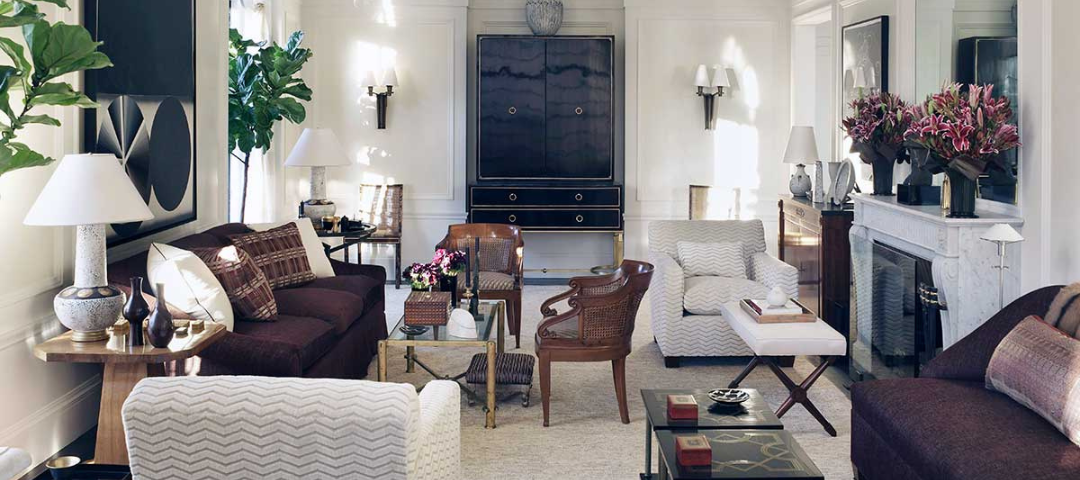
Interiors by David Kleinberg Design Associates. Photo by Pieter Estersohn.
Why These Distinctions Matter When Sourcing
Recognizing the Louis period styles is a practical sourcing tool. Imagine sourcing seating for a quiet library. A Louis XV bergère may introduce exactly the warmth and softness the room requires.
Furnishing a formal entry? A Louis XIV console provides the architectural gravitas that establishes the space immediately.
Designing a restrained dining room with contemporary lighting? Louis XVI chairs bridge those worlds with ease.
What matters most is what the furniture contributes emotionally. Each style offers its own vocabulary of proportion, movement, and presence. Seeing past the decorative details is what sourcing with intention looks like.
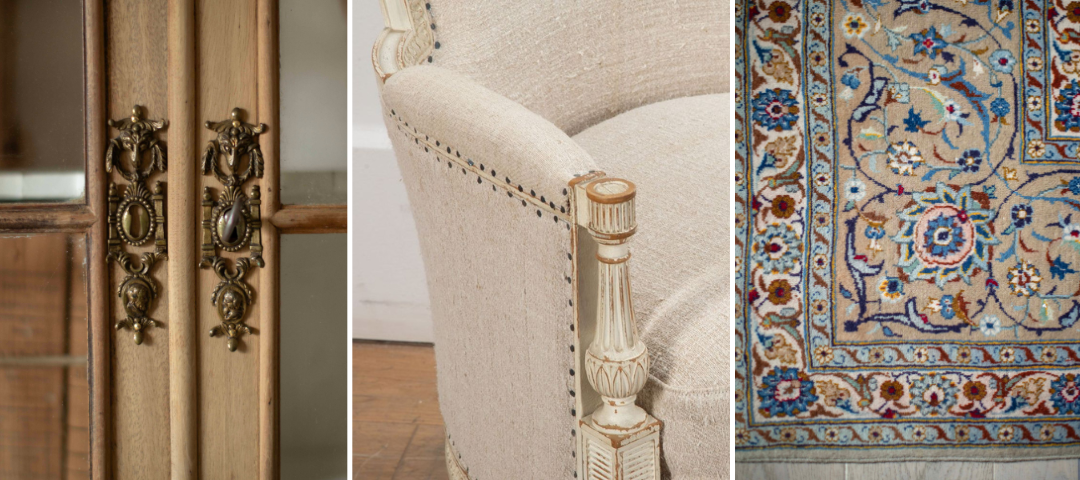
Images courtesy of Lorfords.
Training the Eye
The most experienced dealers rarely begin by counting carved flowers or identifying motifs. They look at proportion, construction, silhouette, and craftsmanship. Those qualities tell a clearer story than ornament ever will.
That way of seeing shapes how the best dealers present what they sell. Lorfords, the Cotswolds dealer whose Tetbury showrooms have become a first stop for designers across Europe, has built its reputation on treating antiques as a working part of any contemporary room. In announcing its recent collaboration with Sister Parish Design, The Lorfords x Sister Parish collaboration describes antiques as bringing “richness, individuality and permanence” to modern homes. That is a claim about what a piece does once it is in a room, which is precisely what a trained eye learns to assess before it assesses anything else.
Learning the differences between Louis XIV, XV, and XVI is part of developing that trained eye. Over time, recognition becomes intuitive. A silhouette, a leg, or the relationship between ornament and structure begins to tell the story before a catalog entry ever does.
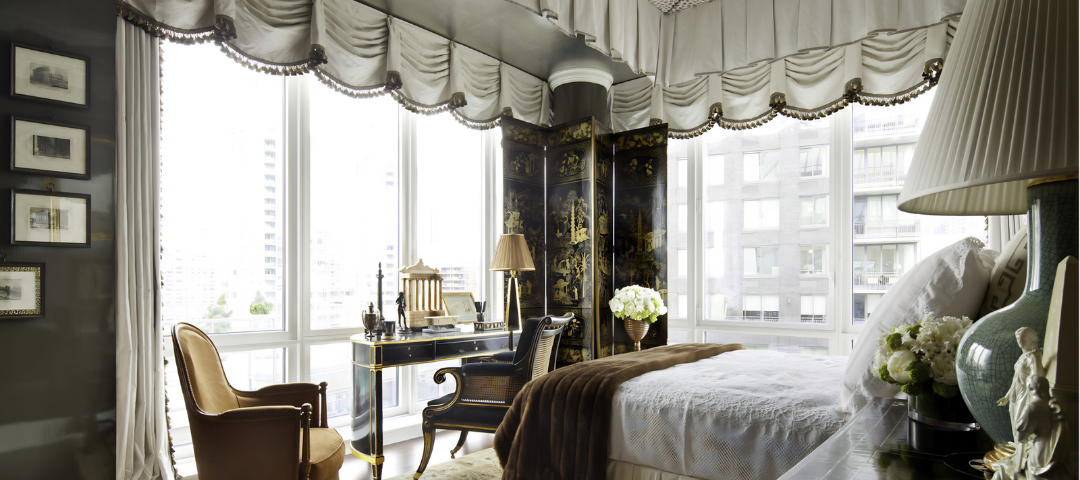
Interior Design by Alexa Hampton / Mark Hampton Interiors.
A Language That Continues to Shape Design
Design trends come and go. The language of proportion, craftsmanship, and thoughtful composition endures.
David Kleinberg reflected on this while discussing his recent work with Galerie, noting that the most successful interiors are built through careful editing, lasting quality, and objects that continue to reveal themselves over time.
Perhaps that explains why designers still reach for the Louis styles more than two centuries later. They are enduring lessons in ambition, scale, craftsmanship, comfort, and restraint. Understanding them means recognizing how a single piece can change the atmosphere of a room.
Once you begin to see those distinctions, you notice them everywhere. From an antiques fair in Paris to a designer’s sourcing trip in New York, the language of Louis is still being spoken.
Lead image courtesy of Lorfords.