


How a new generation of dealers is meeting design’s biggest embrace of antiques in years.
There was a time when antiques felt like they belonged in someone else’s home: kept behind velvet ropes, arranged in formal galleries, governed by inherited knowledge and shelves of auction catalogs. Today, that’s changing. Across the design world, interest in vintage and antique pieces has reached a level not seen in years, and the trend is well documented. From Architectural Digest to Elle Decor, Veranda, and Homes & Gardens, the same theme keeps surfacing: a return to interiors that feel layered and lived-in, where craftsmanship and provenance matter more than matching sets or algorithm-driven trends.
The 2026 1stDibs Interior Designer Trends Survey found that vintage and antique pieces accounted for 36 percent of all items sourced for design projects in 2025, the highest share since 2021. Eighty-five percent of designers sourced vintage furnishings, and the share incorporating antiques made before the 1920s in their designs climbed from 56 percent to 63 percent in a single year. Designers expect to rely on vintage and antiques even more heavily through 2026.
The collected interior is back, and what it offers is something newly manufactured items frequently miss: character.
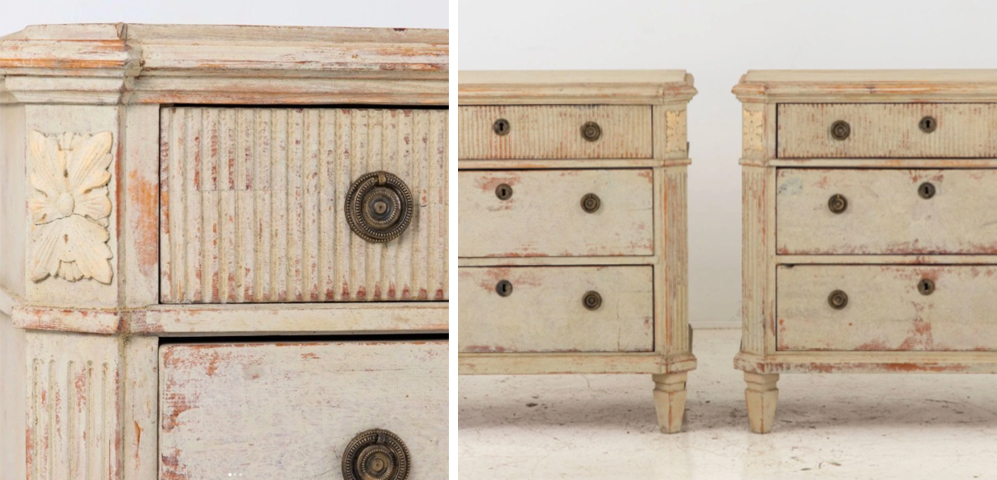
Image courtesy of Modern Antiquarian
The Return of Character
The more digital and mass-produced daily life becomes, the more we crave objects that carry age and history. Elle Decor’s reporting on the resurgence points to renewed interest in painted furniture, antique textiles, folk art, Gustavian pieces, burl wood, and Neoclassical forms, all of it speaking to a deeper appetite for homes that feel personal and impossible to replicate. Gustavian furniture makes the point beautifully: a pared-down Swedish look whose long cult following, as New York dealer Margaret Schwartz has noted, is finally breaking into wider view. Homes & Gardens has described “found luxury” and richly layered rooms as defining qualities of 2026, with the emphasis on storytelling, collected objects, and emotional connection.
The rooms people admire most rarely look like they came from a single trip to the store. They’re created over time, piece by piece.
A New Generation of Dealers
Demand like this needs people to meet it, and a new generation of dealers has risen to the occasion. These up-and-coming professionals are changing how antiques are found and understood, one relationship at a time. Architectural Digest’s profile of the trade’s next generation introduces entrepreneurs whose businesses live as comfortably online as they do at fairs and markets, moving fluidly between a laptop and a barn sale. Many work through carefully curated digital platforms, design collaborations, rentals, and pop-ups that make antiques feel approachable, even inviting. It’s an invitation to the world of antiques, not a test of taste.
They don’t share a single style. What unites them is a shared instinct that today’s buyers want the story as much as the status. Houston dealer Lily Barfield captured the change when she observed that, between Instagram and online marketplaces, people are more informed than ever about what they own and what it’s worth. Knowledge that once circulated within a small community of collectors now travels the world in seconds, and for younger buyers, antiques now feel like part of their own world.
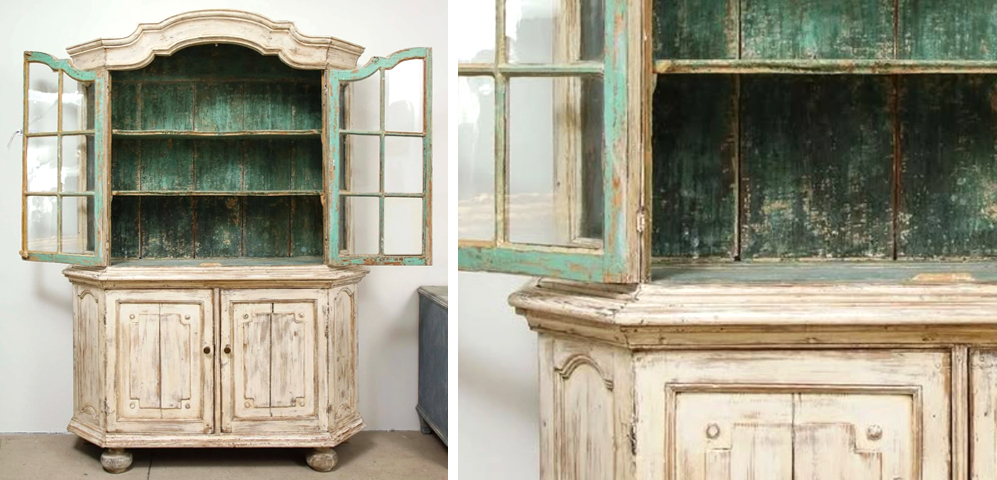
Image courtesy of Modern Antiquarian
The Dealer as Editor
The most meaningful change is editorial. Many younger dealers treat antiques as living participants in contemporary rooms: a weathered Swedish cabinet beneath abstract art, an eighteenth-century commode anchoring a spare modern space, a Louis XVI mirror catching the light of a contemporary kitchen. The goal is depth: a room that carries a bit of history in every corner.
Through Modern Antiquarian, Schwartz deals in the kind of Swedish Gustavian furniture that anchors so many of these mixed rooms. In House Beautiful‘s survey of the antiques poised to trend in 2025, she noted that a good Gustavian example “looks equally at home in a sleek modern setting” as in a reimagined traditional one, pointing to clients who use antique chests as nightstands and old planters as everyday storage. In her telling, the most resonant old things are the ones asked to live new lives.
That instinct aligns with what designers are already chasing. Veranda has noted that collectors are increasingly drawn to earlier period furniture for its craftsmanship, its originality, and the ease with which it sits alongside contemporary design. Room by room, the conversation is shifting from decorating by era to composing spaces with genuine character.

Community Over Gatekeeping
One of the most heartening qualities of these dealers is how openly they share. In Architectural Digest, dealer Carly Krieger recalled entering the trade during the pandemic, braced for the skepticism new arrivals sometimes meet in tight-knit trades. She found generosity instead: mentorship from colleagues who had spent decades learning what she was just beginning to learn.
Antiques have always been sustained through shared knowledge passed hand to hand, and today’s dealers are carrying that tradition forward through new channels.

The Designer’s Case
Projects increasingly prize individuality over showroom polish. Patina now reads as a form of luxury, and provenance has become part of the story a home tells. Antiques answer those desires naturally: they bring craftsmanship into spaces dominated by mass production, soften new construction, and supply the small irregularities that make a room feel lived in.
These new dealers understand this intuitively. They source with a trained eye, photograph with an editorial sensibility, communicate openly, and present pieces in ways that feel entirely current. Their work reaches past selling furniture; at its best, it teaches us how to look.

The Human Eye
Technology has transformed how antiques are discovered. It hasn’t changed why they matter. An algorithm can put an object in front of someone, but it cannot explain construction, proportion, or the quiet beauty of a surface worn smooth over two centuries. It cannot replace connoisseurship, or the instinct that comes from handling exceptional things for years. That work still belongs to dealers.
Which may be why these dealers feel so significant. Fluent in digital culture and committed to permanence, they embrace new tools while honoring history. What they offer the rest of us is an education: a way of seeing why old things have always mattered, and why they belong in the rooms we are living in now.