

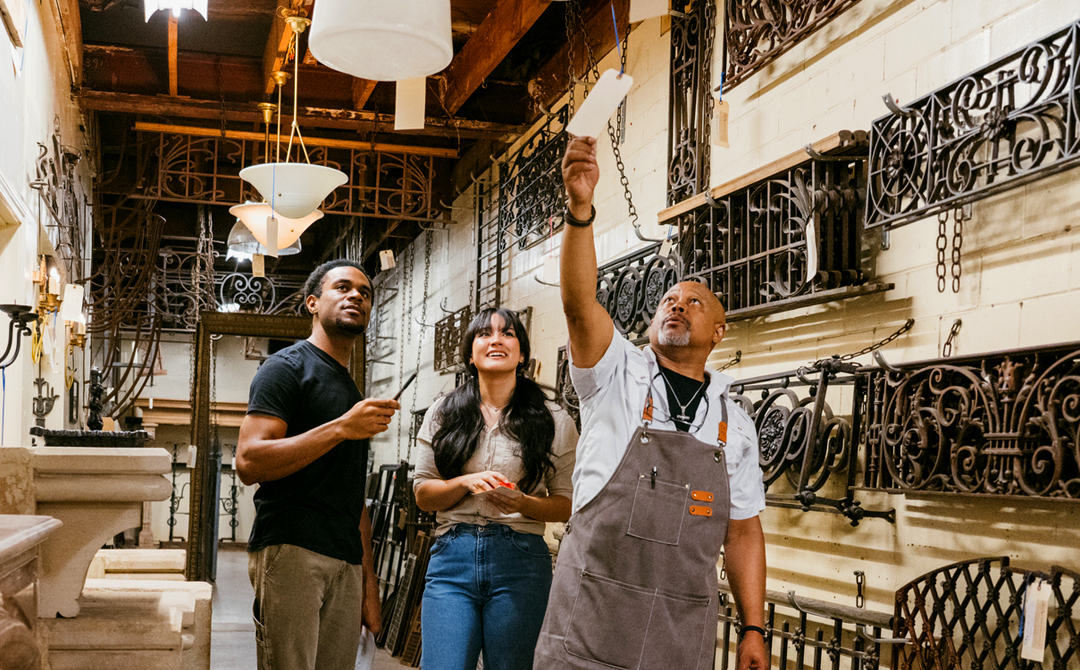
There was a time when discovering an antique required proximity. You encountered objects slowly — through dealers, fairs, specialist shops, inherited collections, or conversations passed between people who had spent decades training their eye. Knowledge traveled alongside the object itself.
Today, nearly everything is visible at once.
A Swedish Gustavian commode, a 17th-century Italian mirror, a Jean Royère chair, or a weathered English refectory table can appear on a screen within seconds, flattened into the same endless visual stream as everything else. The internet has made antiques and vintage more accessible, more global, and more immediate than ever before. But visibility is not understanding.
An image can show what an object looks like. It cannot show where it has been, how it was made, or whether it is what it claims to be.
In many ways, the modern antiques market now depends upon a quieter form of value: discernment.
Because while images can travel instantly, expertise still takes time.

The Value of a Trained Eye
The most respected dealers have always understood that sourcing is only part of the work. Context is as important as the piece itself. Where it came from. How it was made. Whether its proportions are right for the period. Whether the surface has aged naturally. Whether restoration has preserved the integrity of the object or erased part of its history.
These distinctions rarely announce themselves loudly. A trained eye reads an object through its weight, scale, construction, finish, and provenance — the evidence a photograph compresses or hides. And increasingly, those distinctions matter.
As vintage and antiques continue to move deeper into the digital landscape, collectors and designers are growing more visually literate by the day. The audience entering the market today often arrives through imagery first — through interiors, fairs, galleries, editorial features, Instagram, or online marketplaces — but curiosity tends to evolve quickly into discernment.
The questions that separate an exceptional piece from a merely decorative one are not answerable by looking alone. Who sourced this piece? Has it been altered? Is the attribution correct? Where has it lived? What makes this example exceptional rather than ordinary?
The answers require real expertise, not its performance.
Developing that expertise takes time — years spent studying materials, construction methods, historical periods, makers, and provenance. As the National Antique & Art Dealers Association of America notes, many years of study and experience are required to develop the specialized knowledge that makes dealers “recognized authorities in their various fields.”
This has long been one of the defining characteristics of the antique trade at its best: the understanding that objects carry layers of knowledge alongside their beauty. A great dealer is rarely just selling furniture or objects. They are interpreting material culture, preserving context, and sometimes protecting future buyers from costly mistakes they do not yet know how to identify themselves.
That role has not diminished in the digital era. If anything, it has become more essential.

Interior Design by Alexa Hampton / Mark Hampton Interiors
The Evidence of Age
Age leaves physical evidence that reproductions cannot fake.
The sheer volume of imagery now circulating online has created a strange paradox within the design world. We are seeing more objects than ever before, while often understanding less about them. Rooms are shared endlessly, references multiply by the hour, and styles move across platforms detached from their original context.
A 19th-century Swedish cabinet and a newly manufactured reproduction may briefly occupy the same visual territory online, even when their material reality could not be more different in person.
And yet the physical experience of a truly exceptional object still resists imitation. Age accumulates slowly and cannot be manufactured all at once. Timber contracts and settles. Brass softens through handling. Upholstery compresses, finishes gain depth, joinery loosens almost imperceptibly. None of these changes is dramatic on its own, but together they produce something a reproduction cannot stage: the softened edge of a drawer worn by generations of hands, the depth of old timber beneath wax, the quiet confidence of proportion that comes from centuries of refinement rather than trend forecasting.
These qualities do not reveal themselves through speed. They require attention, and often someone capable of helping others see what they are looking at.
This is where expertise becomes most valuable — less a credential than a way of seeing. The ability to recognize the difference between age and imitation. To identify what belongs to a period and what merely resembles it. To place an object within a broader historical and cultural context.
In a marketplace increasingly driven by images, that kind of knowledge remains one of the few things that cannot be replicated at a glance.

On Provenance
Provenance is the documented history of an object: where it has been, who owned it, how it survived, and how it has been altered or restored along the way.
But its meaning extends far beyond documentation alone. At its best, provenance becomes continuity — a record of where an object has been, who cared for it, how it survived, and why it still exists at all. It transforms an object from anonymous decoration into something with a history. And that history is only as durable as the record that carries it.
For designers, that depth increasingly matters.
Interiors today are often less concerned with strict period accuracy than with atmosphere and individuality. The most compelling rooms rarely feel assembled all at once. They evolve through layers — contemporary alongside antique, restraint beside ornament, inherited pieces beside unexpected discoveries gathered over time.
Objects carrying genuine age and context bring a certain gravity to those spaces. They slow a room down. They introduce irregularity, memory, and evidence of human touch.
Perhaps that is why antiques continue to feel so compelling. In a culture increasingly shaped by immediacy and replication, real objects still possess something difficult to manufacture artificially: presence.
The pieces people return to are rarely the most perfect ones. They’re the ones carrying evidence of life — surfaces softened through use, materials altered by time, proportions shaped before mass production standardized everything into sameness.
The appeal isn’t nostalgia. It’s connection.
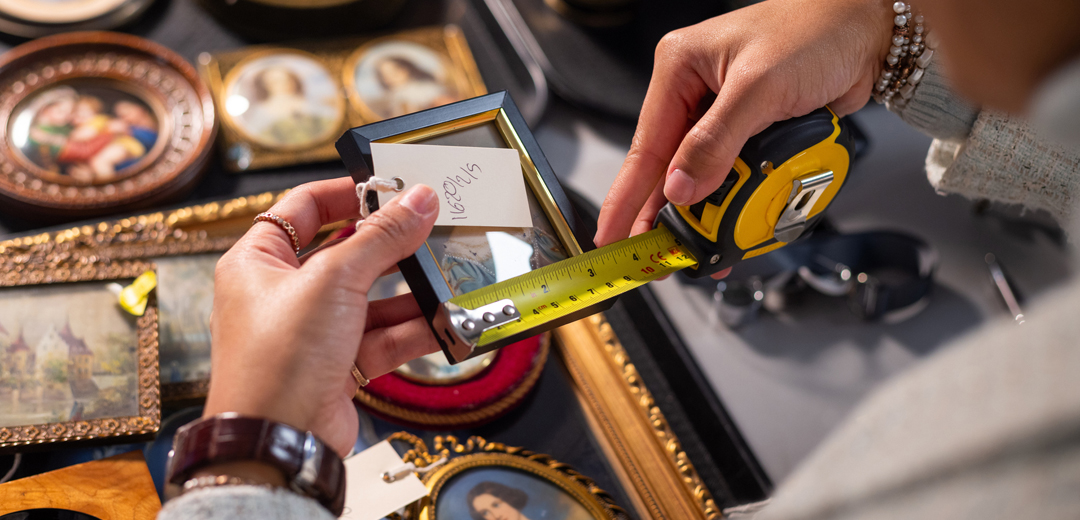
The Quiet Work of Trust
This is also part of why fairs and associations continue to hold such importance within the trade, even as commerce becomes increasingly digital.
Organizations like LAPADA, BADA, CINOA, and AADLA represent something larger than membership alone. Behind the scenes exists an extraordinary amount of scholarship, peer review, and vetting that preserves confidence within the market itself.
At major fairs, committees of specialists review authenticity, attribution, provenance, and condition with remarkable rigor. The process is often invisible to visitors, but that invisibility is part of the point. Trust within the antiques world has always depended upon individuals willing to spend decades developing expertise others can rely upon.
Integrity and fair dealing may sound understated as guiding principles, but in today’s market they feel increasingly valuable.
Expertise remains one of the few things that cannot be mass-produced.

The Knowledge Behind the Object
Technology has already reshaped the trade — digital inventories, global marketplaces, online fairs. The question is no longer whether objects move through screens, but whether their knowledge moves with them.
For most of the trade’s history, that knowledge traveled by proximity: a dealer’s account, a fair’s vetting, a conversation between people who had trained their eye for decades. Online, the image too often arrives alone — severed from the provenance, condition, and context that give it meaning.
The work now is to reattach them. Platforms like Ronati Studio exist for exactly this reason: not to replace the trained eye, but to let dealers carry provenance, documentation, and context alongside the object, so the understanding travels with the image rather than behind it.
Because authenticity was never only about whether an object is real. It’s about whether the knowledge surrounding it survives the journey to the next person who needs it.