

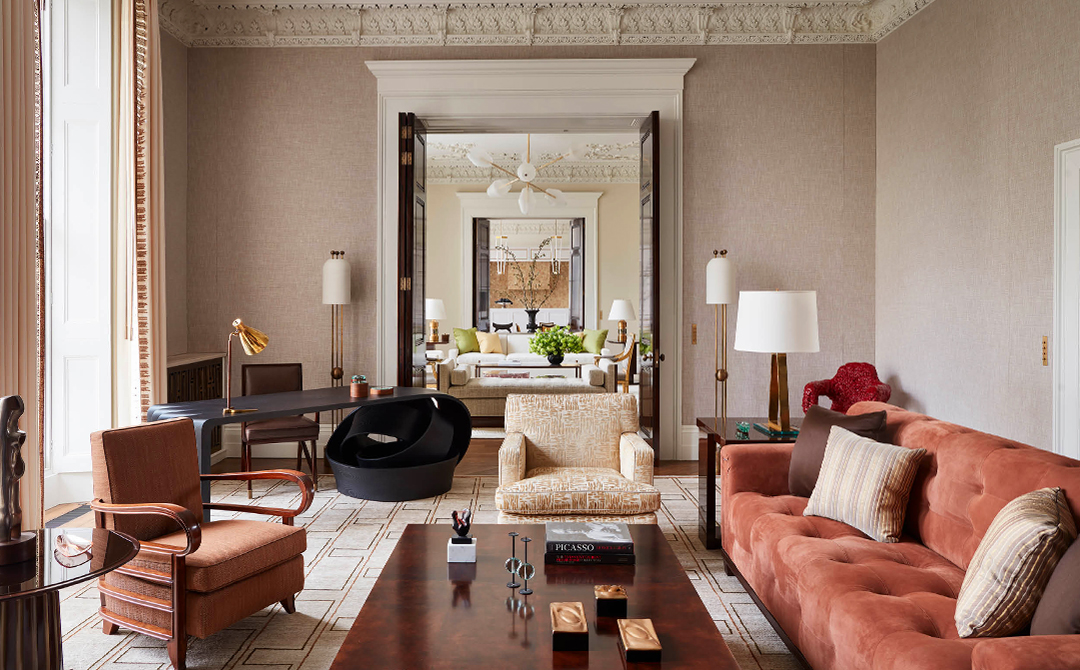
For years, interiors seemed to move steadily toward amplification. More pattern. More layering. More visual noise. Rooms designed not simply to be lived in, but to perform — particularly online.
And yet, beneath all of it, another aesthetic has been quietly returning.
Not the stark minimalism of empty white boxes or ultra-contemporary restraint, but something softer, moodier, and more architectural. A sensibility shaped by the 1990s — by Calvin Klein campaigns, understated Ralph Lauren interiors, Belgian linen, dark woods, chrome, suede, parchment, and rooms that understood the power of negative space.
You can feel it again now in the interiors world. In fashion. In photography. In the renewed fascination with restrained luxury and spaces that feel calm without feeling sterile. The shift is subtle, but unmistakable.
After years of highly styled maximalism, many designers are gravitating toward interiors that feel edited rather than decorated. Rooms that rely less on decoration and more on proportion, texture, and atmosphere.
And importantly, this new minimalism is not anti-history. If anything, antiques and vintage are becoming essential to making these spaces feel believable.
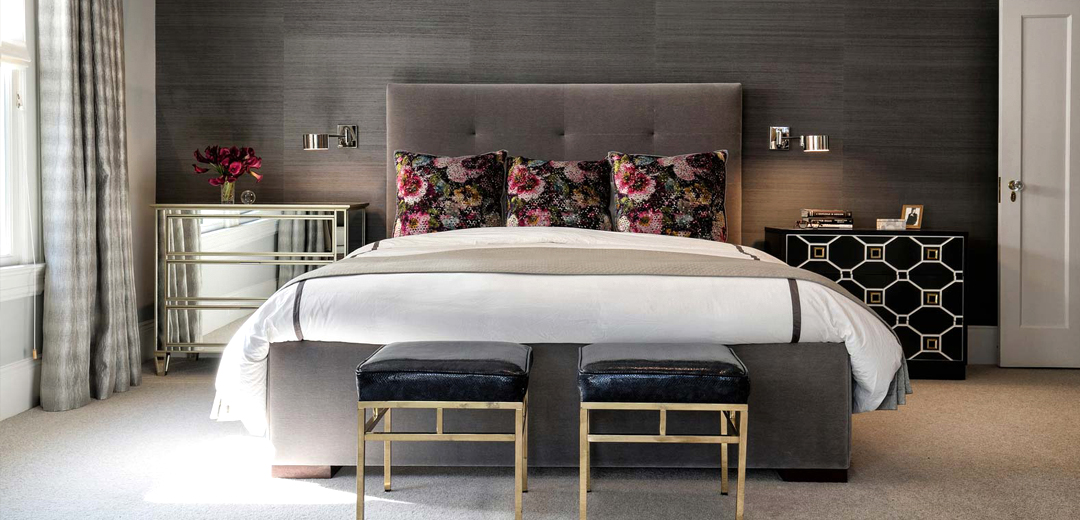
Interiors by Fisher Weisman Brugioni. Photo by Chris Back.
The Difference Between 1990s Minimalism and What Came After
The minimalist interiors that dominated the 2010s often prized perfection above all else. Pale oak. White walls. Invisible hardware. Surfaces so clean they bordered on anonymous.
But the 1990s version carried more tension. It paired restraint with sensuality. Clean lines with tactile materials. Tailored upholstery beside aged bronze or worn leather. A slipcovered sofa beneath an antique mirror. A chrome lamp beside a weathered Swedish table.
There was warmth beneath the restraint.
Part of that influence came from fashion. Designers like Calvin Klein, Ralph Lauren, and Jil Sander defined an era that rejected overt excess in favor of precision and atmosphere. But interiors translated that language differently.
Ralph Lauren’s world, in particular, offered a version of minimalism grounded in heritage that felt tailored rather than cold. Dark woods, equestrian references, ivory upholstery, antique silver, soft lighting, and rooms that felt collected over time. Even at its most restrained, there was always evidence of life.
That nuance feels particularly relevant now. Many of today’s interiors conversations point toward spaces with greater emotional depth, craftsmanship, and permanence, which may explain why antiques fit so naturally into this aesthetic resurgence.
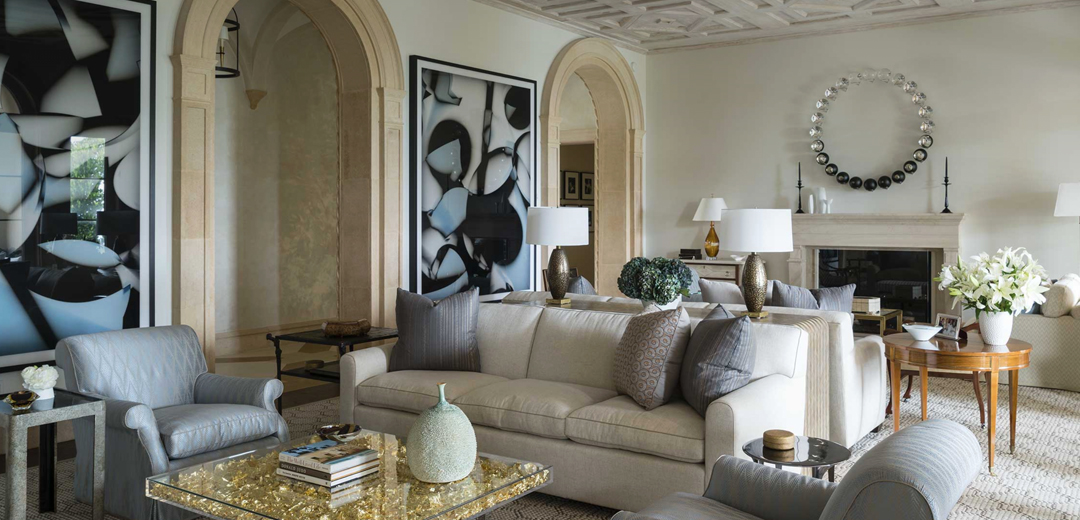
Interiors by David Kleinberg Design Associates. Photo by James Merrell.
The Warmth Beneath the Restraint
Minimalism without contrast can quickly become flat. A room composed entirely of new pieces — all sharing the same finish, tone, and visual language — risks feeling more like a rendering than a home. Vintage and antiques interrupt that perfection in the best possible way.
A 19th-century Swedish chair introduces irregularity beside a tailored modern sofa. A worn walnut chest brings depth to a quiet neutral palette. Patinated brass catches light differently than factory-polished finishes ever could.
Designers like Jeffry Weisman have long understood that understated interiors still require richness beneath the surface. Speaking about his own sensibility, Weisman described an enduring appreciation for “luxurious materials, beautiful tailoring, and quiet style” — an approach that feels especially relevant to the renewed interest in restrained, deeply layered interiors today.
David Kleinberg’s work similarly reflects the idea that restraint only works when it still feels human. His interiors, which often balance classical architecture with a quieter modern sensibility, feel luxurious without relying on excess — spaces where texture, scale, and proportion carry as much weight as ornament. — spaces where texture, scale, and proportion carry as much weight as ornament.
Together, those ideas feel especially aligned with where interiors are heading now. Not toward maximalism for maximalism’s sake, nor toward severe minimalism, but toward rooms with clarity. Rooms with edit. Rooms where every object has enough space around it to breathe.
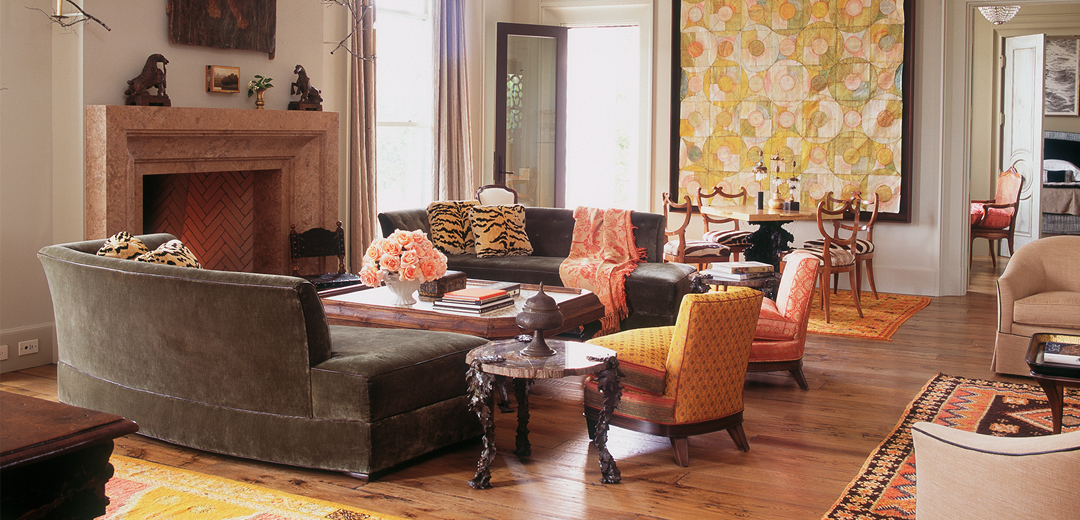
Interiors by Fisher Weisman Brugioni. Photo by Grey Crawford.
Why Understatement Feels Luxurious Again
Some of the renewed fascination with 1990s aesthetics undoubtedly stems from cultural nostalgia. Fashion imagery from the era continues to circulate widely — the soft-focus elegance, monochromatic dressing, understated tailoring, quiet apartments with oversized windows and almost no ornament at all. There is a cinematic quality to it that still resonates.
But the appeal goes deeper than nostalgia. In an era defined by constant visibility and overstimulation, restraint itself begins to feel luxurious. Not empty rooms. Not absence. But confidence.
The confidence to leave space unfilled. The confidence to let materials speak. The confidence to choose fewer things, but better ones.
That shift is already visible across the design industry. Publications including Architectural Digest, ELLE Decor, and VERANDA have all noted growing interest in richer woods, sculptural forms, chrome accents, layered neutrals, and interiors that prioritize longevity over trend cycles.
Importantly, these rooms rarely feel devoid of history. Even the most contemporary spaces now seem to rely on at least one grounding element from the past … an antique stool, a vintage lamp, a primitive cabinet, a weathered mirror.
Because history softens minimalism.
It gives restraint a pulse.
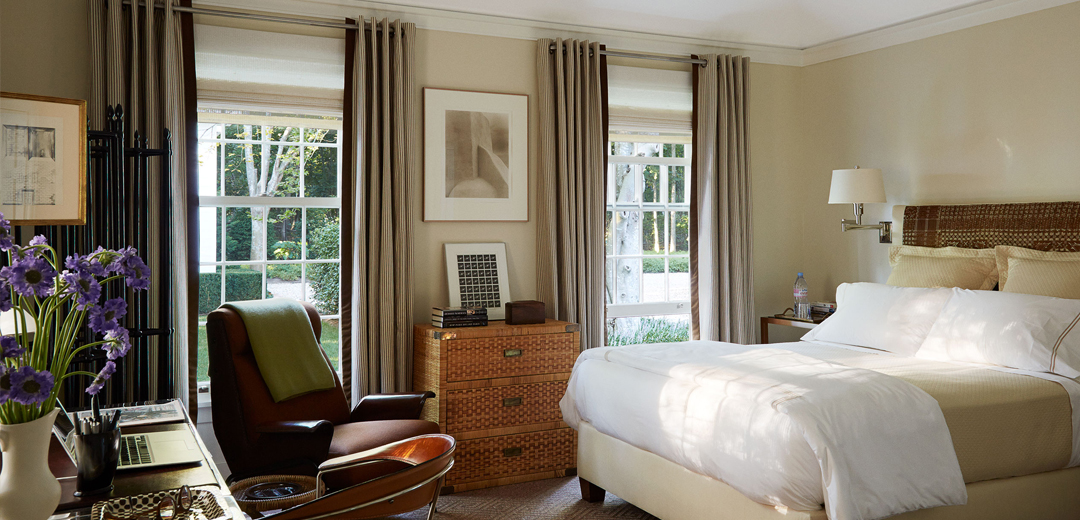
Interiors by David Kleinberg Design Associates. Photo by Oberto Gili.
What This Means for Dealers and Collectors
For dealers working in antiques and vintage, this return to understated interiors presents an interesting shift in demand.
The market is no longer driven solely by ornate statement pieces or highly decorative rooms. Increasingly, designers are searching for objects with sculptural presence, exceptional materials, and subtle patina — pieces capable of anchoring quieter spaces.
Not everything needs to dominate a room. Sometimes the most compelling object is simply the one with the strongest silhouette, the most beautiful surface, or the piece that reveals itself slowly over time.
That creates renewed relevance for categories that may once have felt difficult to place: Swedish Gustavian seating, pared-back continental furniture, parchment finishes, bronze and chrome lighting, monastic tables, neoclassical forms, worn leather, tailored upholstery, and architectural objects with restraint built into their proportions.
The irony, of course, is that truly understated interiors are rarely simple to create. They require discipline. Editing. Sensitivity to texture and scale. And above all, objects with enough integrity to hold attention quietly. Which is precisely why antiques resonate so strongly.
Because in rooms designed around restraint, authenticity becomes impossible to fake.
Lead image interiors by David Kleinberg Design Associates. Photo by Luke White.