


For many dealers, inventory management begins innocently enough: a spreadsheet, a notes app, a system that works … until it doesn’t.
At a certain scale, the strain shows. Items slip through the cracks, listings fall out of sync, and hours disappear into repetitive tasks that have little to do with sourcing, storytelling, or selling. And beneath it all is a more fundamental issue: most inventory tools were never designed for this industry in the first place.

A Category Unlike Any Other
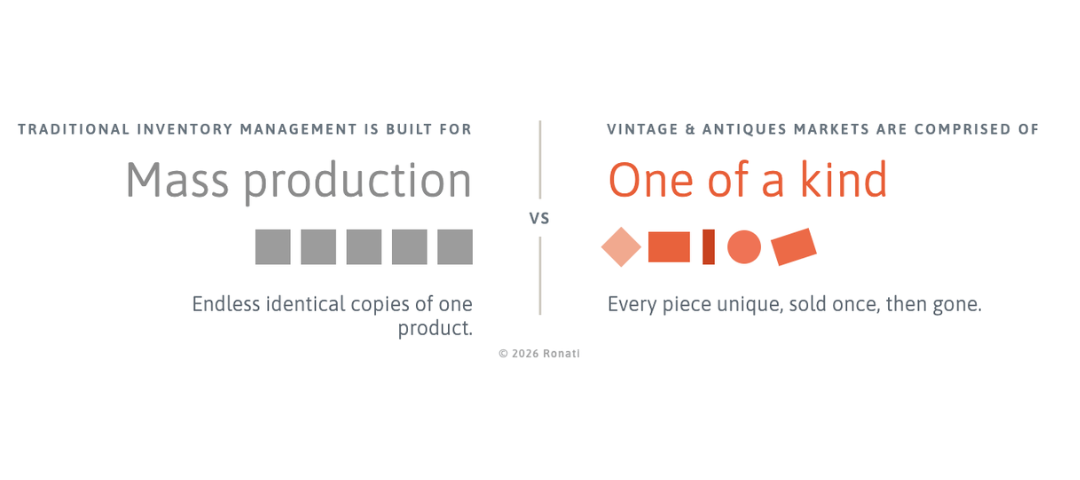
Antiques and one-of-a-kind goods don’t behave like traditional retail inventory and treating them as if they do creates friction at every stage.
In conventional retail systems, a single SKU might represent hundreds, even thousands, of identical items. But for antiques dealers, every object is singular, with its own provenance, condition, dimensions, and narrative.
That distinction is foundational. It reshapes how every piece is documented, priced, and sold.
Each piece requires its own documentation, its own pricing logic, its own positioning. What works for mass-produced goods simply cannot account for the variability and depth that define the antiques trade.
Where General Tools Break Down
When dealers rely on generalized systems, or retrofit tools built for other industries, the limitations tend to surface quickly:
- Lack of flexibility for unique items. Standard inventory platforms are optimized for repetition, not individuality. They struggle to accommodate the layered details that make a piece meaningful and marketable.
- Fragmented workflows. Many dealers still operate across a patchwork of spreadsheets, documents, and manual uploads, a reality that remains common across the industry. The result is duplication of effort and increased risk of error, particularly when listing across multiple marketplaces.
- Lost time. Uploading, formatting, resizing, rewriting: these tasks compound quickly. What should be a streamlined process becomes a daily drain on time and attention.
- Limited visibility across inventory. When inventory lives in multiple places, it becomes difficult to maintain a clear, real-time view of what is available, where it’s listed, and what has sold.
And most importantly, these tools rarely support the work that matters most: getting exceptional pieces in front of the right buyers at the right moment.

The Hidden Cost: Lost Visibility
Inventory management isn’t simply operational. It’s directly tied to visibility and revenue.
When listings are delayed, inconsistent, or incomplete, pieces remain effectively invisible. They sit in storage, in back rooms, or in disjointed systems, rather than being positioned for discovery.
This is where the conversation shifts from tools to strategy.
Visibility doesn’t happen accidentally. It’s built.

Built for the Way Dealers Actually Work
What distinguishes purpose-built tools is alignment.
Platforms designed specifically for antiques and vintage sellers recognize the realities of the trade. They understand that a piece moves constantly between sourcing, documenting, pricing, and presenting, and that speed can’t come at the cost of detail. They’re built to hold a consistent presence wherever a dealer sells: online, at fairs, in the shop, or across all of them.
As Ronati customer Matt D. put it:
“What stands Ronati apart is their real keenness to work with dealers to find what we’re missing, what we’re lacking and what we need, and then going out and giving us just that.”
That alignment is deliberate, and is the result of building with the industry rather than adapting to it.
From Documentation to Discovery
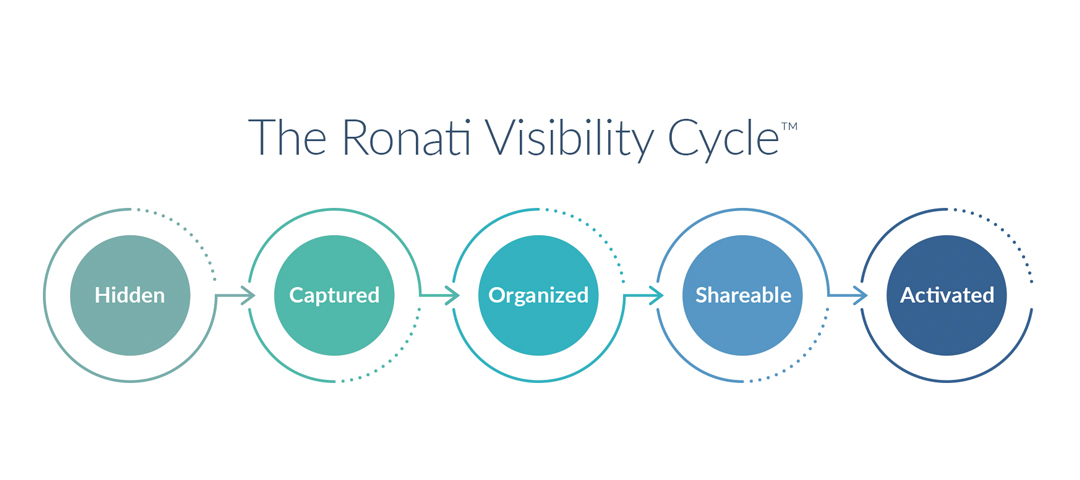
Purpose-built platforms like Ronati Studio extend beyond inventory management to support the full lifecycle of a piece, from acquisition to sale.
Dealers can document inventory the moment it is sourced, organize it centrally, and distribute it across marketplaces, social channels, and client communications, all without recreating the work each time.
In practical terms, that means:
- Faster time from acquisition to listing
- Greater consistency across platforms
- Improved accuracy and reduced double-selling
- More time spent sourcing, selling, and building relationships
Or, as Ronati customer Justin G. shared:
“Ronati has drastically improved our productivity and saves us a ton of time … their technology is changing the industry.”
With Ronati Studio, dealers can build a complete item record once and push it across marketplaces and channels from a single dashboard — no reformatting, no duplication.

A Shift Already Underway
The antiques and vintage market is evolving … building on its foundations, not breaking from them.
Dealers are no longer choosing between tradition and technology. They are integrating the two, using tools that respect the individuality of their inventory while enabling them to operate with greater clarity and reach.
General inventory systems weren’t built for this work. But the right tools are.
Closing Note
The dealers already making this shift aren’t waiting for the industry to catch up. They built visibility into how they work, and the right tools made that possible. Ronati Studio was built for exactly that.