

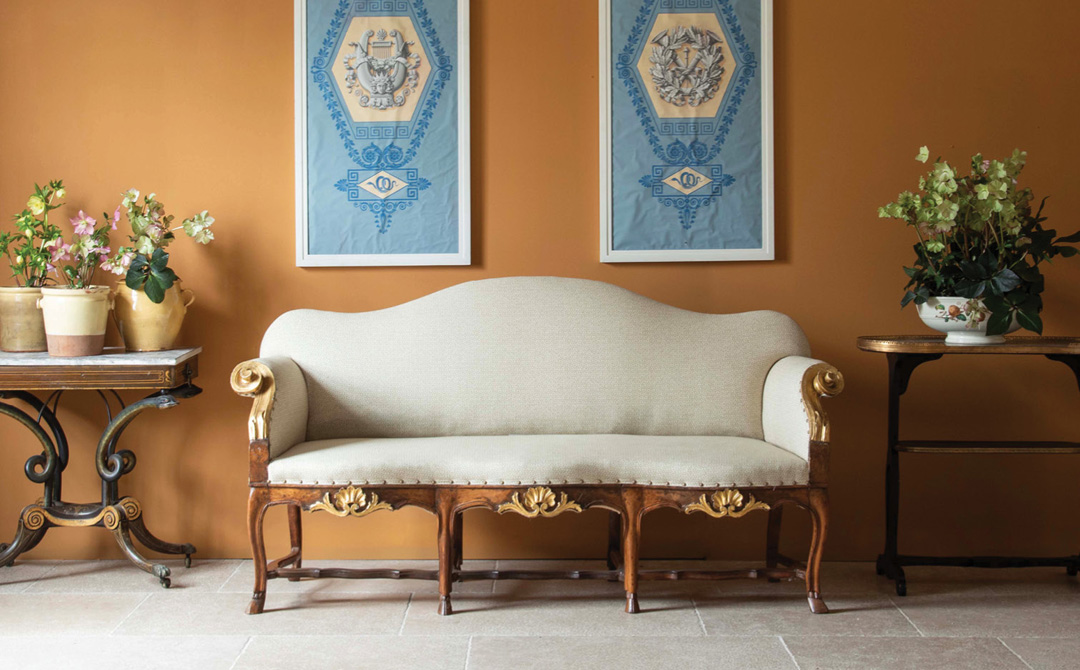
For years, the antiques trade has been told that the future would happen online.
And much of it has. Pieces now travel around the world on a screen before they move an inch from a dealer’s showroom. Collectors discover new dealers on Instagram. Designers source from several countries in an afternoon. Digital marketplaces have opened doors that geography once kept firmly closed.
And yet, people keep showing up. They travel to fields before sunrise. They line up outside tents. They cross cities, states, and countries to walk the aisles, meet dealers, pick up objects, turn them over, ask questions, and find pieces they didn’t even know they were looking for.
The fair is not dead. If anything, it’s entering one of its more interesting eras.
What a Screen Cannot Replace
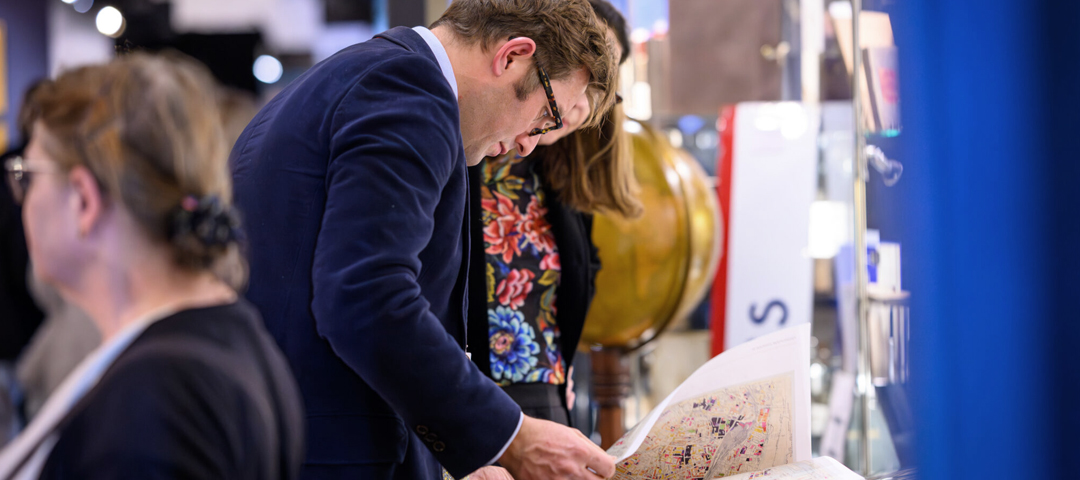
There’s something wonderfully direct about buying at a fair. An object is there in front of you with all the things a photograph can only suggest: its scale, weight, surface, construction, imperfections, and presence. The person who sourced it may be standing a few feet away. That proximity changes the exchange.
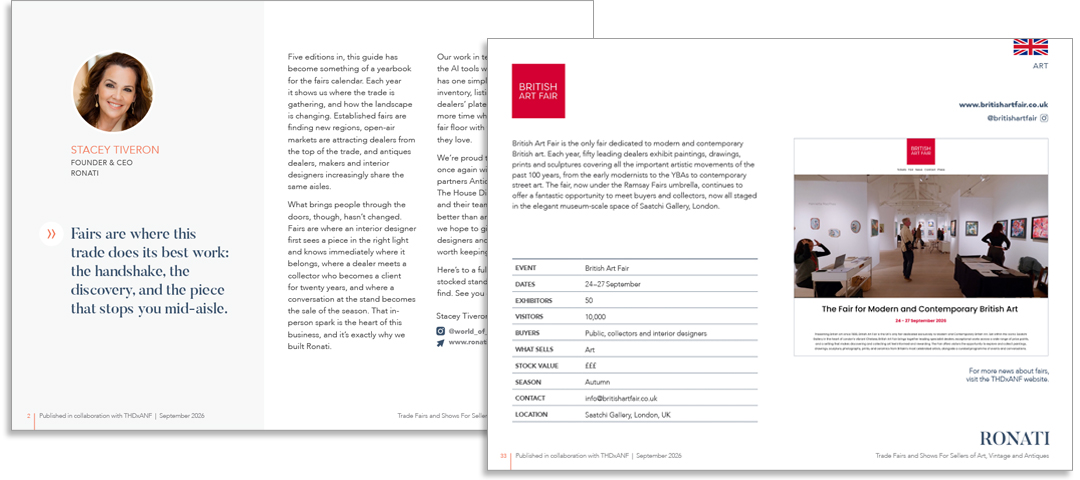
As Ronati Founder and CEO Stacey Tiveron observes in the new edition of our 2026/27 Guide to Trade Fairs and Shows for Sellers of Art, Vintage and Antiques, a fair is where a buyer can pick up a piece, hear its story, and come to trust the dealer telling it.
That trust has always been central to the antiques trade, and it carries a unique weight today. Buyers have access to more objects, sellers, images, and information than at any other point in the market’s history. At the same time, AI-generated content is becoming increasingly convincing, and a polished digital presentation is easier to create than ever.
Against that backdrop, the physical object holds new authority. You can look beneath the table, inspect the joinery, ask about provenance, talk to the person who found the piece, and return an hour later because you can’t stop thinking about it.
Buying in person also suits what many buyers are looking for now: authenticity, experience, and sustainability, all of which antiques and vintage have offered all along.
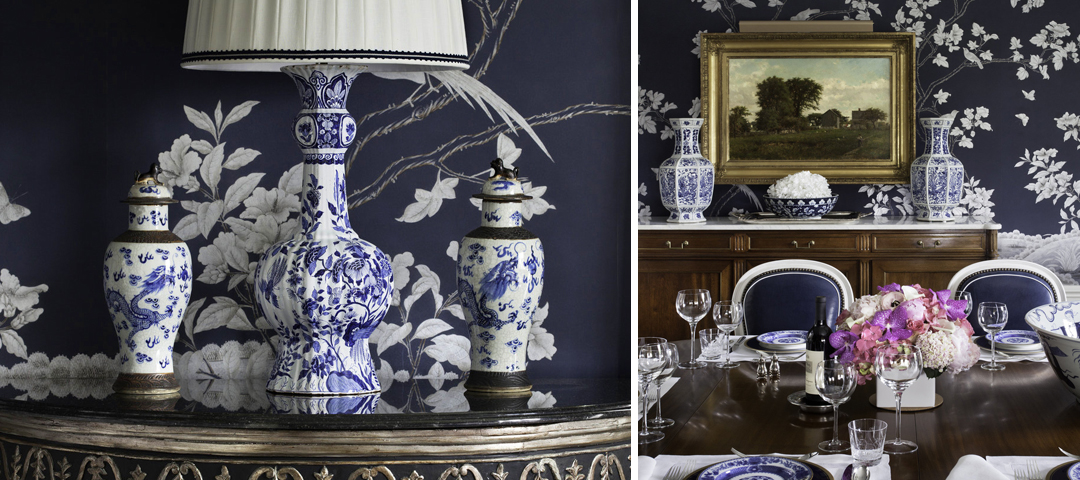
Interior Design by Alexa Hampton / Mark Hampton Interiors
A Fair Can Look Like Many Things
What is changing is the definition of the fair itself. The traditional vetted fair remains an important part of the landscape. In 2026, the British Antique Dealers’ Association (BADA) held its first major fair outside London, bringing 40 members to Rutland. LAPADA continues to gather more than 80 exhibitors in Berkeley Square, spanning art, antiques, jewelry, furniture, and the decorative arts.
But alongside these established models, the boundaries are becoming more fluid. In their introduction to the new Guide, Gail McLeod and Angel Tan of The House Directory x Antiques News & Fairs point to the rise of art fairs and elite makers’ events, as well as remarkable growth in open-air fairs and flea markets. Dealers from the upper reaches of the trade are experimenting with these less conventional settings and, in doing so, meeting different audiences.
The distinctions between antiques, art, design, and contemporary making are also becoming less rigid on the fair circuit. That reflects what has already happened in interiors. A room might bring an 18th-century commode together with contemporary ceramics, a mid-century chair, an Old Master drawing, and a newly commissioned textile without feeling the need to declare allegiance to any one period.
Buyers now move in much the same way. A collector may also be a design client. A designer may become a collector. Someone who arrives interested in contemporary craft may leave having bought their first antique. For dealers and fair organizers, those overlaps create opportunity: an audience that arrives curious and may leave with something it didn’t expect to want.
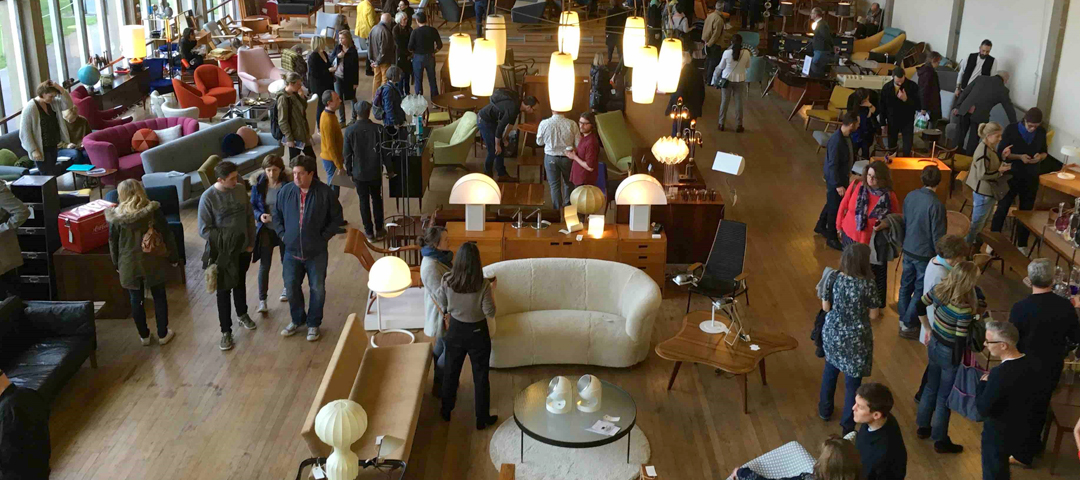
Image courtesy of Modern Shows
The Booth Is No Longer the Edge of the Fair
There’s another change taking place, and it’s happening beyond the aisle. The old distinction between selling in person and selling online is becoming less useful.
A buyer may discover a dealer online before deciding to visit their booth at a fair. An interior designer might photograph a piece at a fair and return to it digitally days later. A conversation begun over an object in London can continue with measurements, images, specifications, and other inventory long after everyone has gone home.
The fair creates the moment of connection. Technology can give that connection somewhere to go.
Technology already belongs in a trade built on physical objects and human expertise. As AI becomes more prominent across the industry, the better question is what we ask it to do.
At Ronati, we believe the most useful technology supports the dealer in the work already happening: documenting an acquisition while its details are fresh, keeping inventory organized, finding information when a client asks for it, presenting pieces professionally, and carrying a relationship beyond a single meeting or event. The human encounter remains the valuable part.
A New Kind of Fair Calendar
All of this makes choosing where to exhibit and where to attend more complicated than simply identifying the biggest names on the calendar. Different fairs create different opportunities. One may offer access to established collectors. Another may put a dealer in front of interior designers. A regional event may open a market that has been difficult to reach online. An outdoor fair might introduce a more traditional dealer to an entirely new generation of buyers.
What matters most is which fair puts a dealer’s inventory in front of the people most likely to understand it.
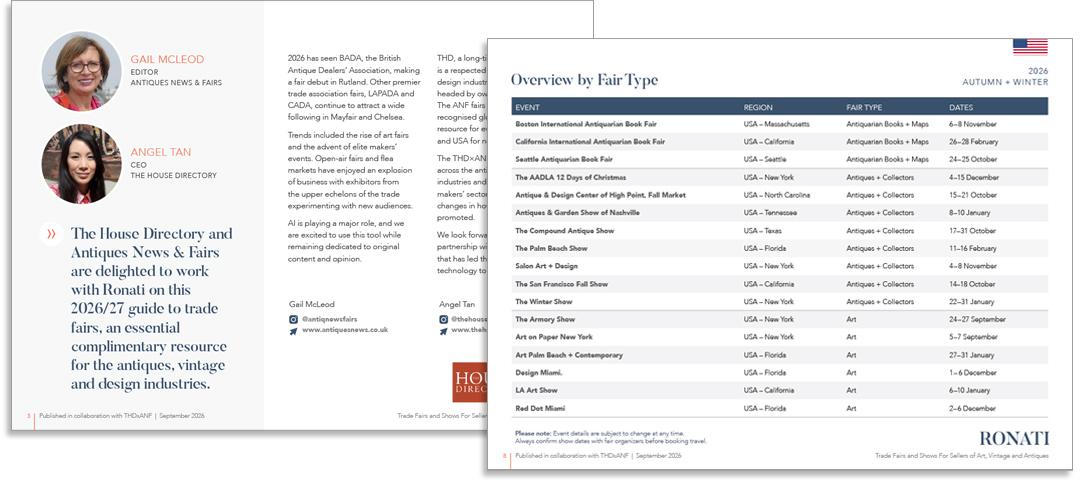
That is the thinking behind the 2026/27 Guide to Trade Fairs and Shows, created in partnership with The House Directory x Antiques News & Fairs. Now in its fifth edition, the guide brings together the information dealers need to make those choices more intentionally: location, timing, style and category focus, audience, price point, and the character of the event itself.
A calendar tells you when a fair happens. A good guide helps you understand whether you belong there.
The More Things Change
There’s a bit of irony in watching one of the oldest ways of selling become newly relevant. But perhaps there shouldn’t be. The antiques trade has always been built around more than objects. It runs on knowledge passed from one person to another, reputations established over years, relationships formed across counters and booths, and the excitement of finding something you weren’t expecting to find.
None of that is incompatible with the digital age. In many ways, the digital age has made it more valuable.
The future of the fair is unlikely to look exactly like its past. Venues are changing, categories are crossing over, new buyers are entering, and dealers are experimenting. AI and other technologies are reshaping what happens before the doors open and after they close.
But at the center of it all is something familiar: a piece, a person who knows its story, and someone stopping in the aisle to take a closer look.
Explore Ronati’s 2026/27 Guide to Trade Fairs and Shows for Sellers of Art, Vintage and Antiques
Created in partnership with The House Directory x Antiques News & Fairs, the fifth edition gathers fairs and events across the US, UK, and Europe, with the information you need to decide where to exhibit, where to attend, and where your inventory may find its next audience.
Lead image courtesy of Lorfords.