

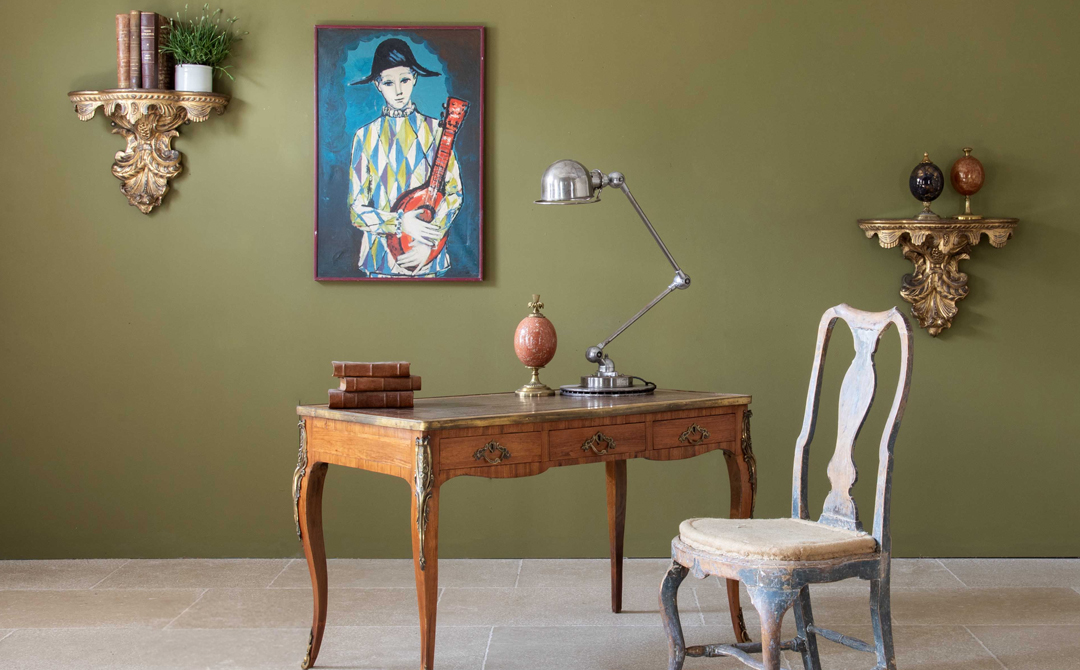
The more artificial things become, the more people seem to crave what’s real.
Artificial intelligence has rapidly become part of daily life. It shapes the way we search, shop, write, design, and increasingly, how culture itself is produced and consumed. Images can now be generated in seconds. Entire interiors can be rendered without ever existing physically. Algorithms anticipate preferences before people fully articulate them themselves.
And yet, alongside all of this acceleration, something quieter has been happening.
People are gravitating back toward objects that feel undeniably real. Across interiors, fashion, hospitality, and collecting, there has been a visible shift away from spaces that feel overly polished or algorithmically assembled. Designers are increasingly favoring rooms that feel layered, personal, and slightly irregular — interiors where age, patina, craftsmanship, and historical character are allowed to remain visible.
Publications including ELLE DECOR, VERANDA, Real Simple, and Architectural Digest have all pointed toward the same broader movement emerging across 2026: a growing preference for interiors that feel collected rather than perfectly coordinated.
That evolution has naturally placed antiques and vintage furniture back at the center of design conversations.
Not as nostalgia or decoration, but as a response to sameness.
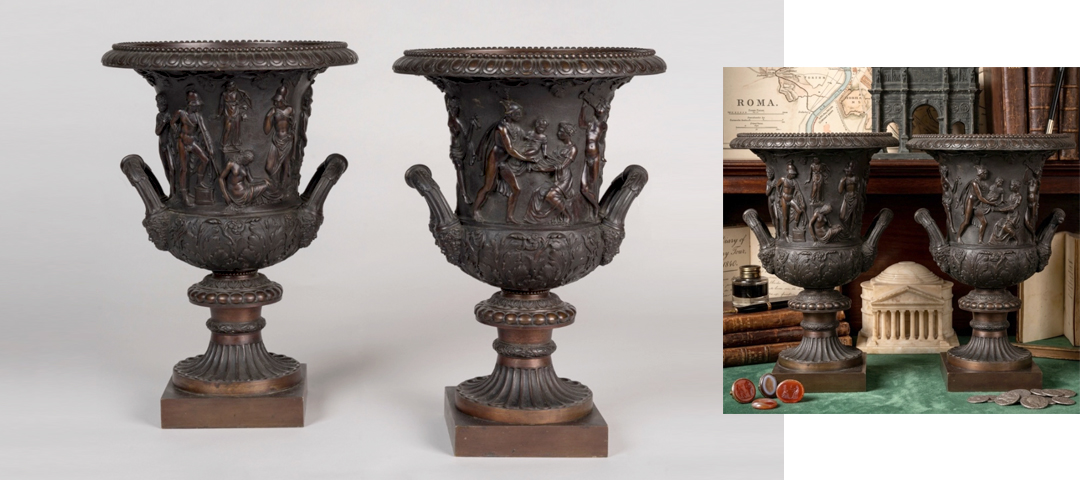
Image courtesy Butchoff London
Why Antiques Feel Different Right Now
For years, digital culture rewarded speed and immediacy. Trends moved quickly. Interiors became increasingly optimized for screens. Furniture was often designed to photograph well before it was designed to age well.
But the more synthetic online environments become, the more noticeable genuine material character feels. A hand-planed table reflects light differently than a factory finish. A repaired edge or worn armrest reveals decades of use. The subtle asymmetry of a carved frame immediately distinguishes it from mass-produced replicas that may appear visually similar online but feel fundamentally different in person.
In a recent design forecast, ELLE DECOR’s coverage of 2025 interiors trends described a growing “hunger for authenticity,” particularly around objects with visible age and provenance.
That language feels significant because it points toward something larger than trend forecasting. It suggests a broader cultural recalibration around how people define value.
Increasingly, buyers are not simply searching for newness. They are searching for permanence. Individuality. Emotional resonance. Objects that feel grounded in reality rather than endlessly reproducible.
Antiques naturally carry many of those qualities.
And perhaps most importantly, they resist frictionless consumption. A one-of-a-kind object asks more of the buyer. It requires attention, interpretation, and often a willingness to live with something imperfect or unexpected. That may be part of why antiques feel increasingly compelling right now.
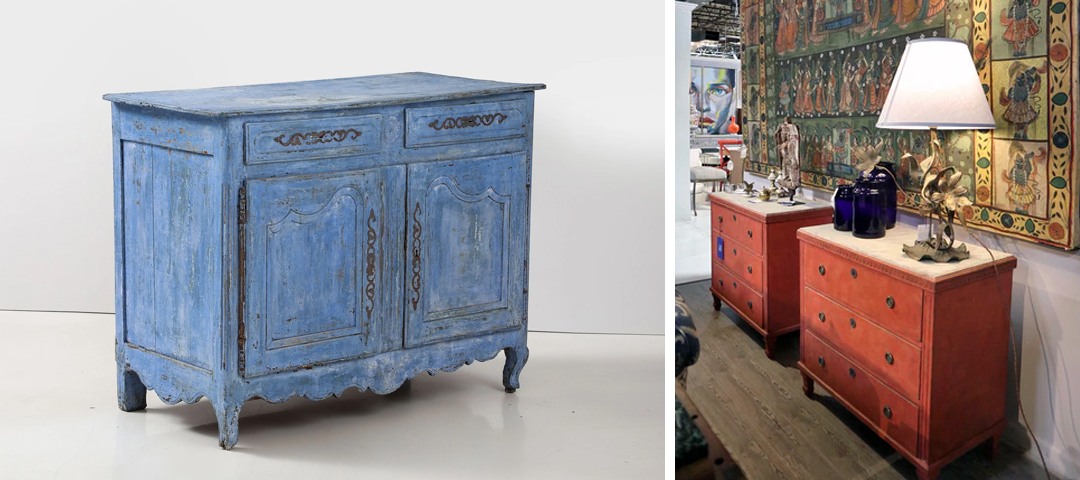
Image courtesy of Modern Antiquarian
The Return of the Collected Interior
This shift is especially visible within contemporary interior design.
Designers who once felt pressure to keep interiors stylistically pure are increasingly mixing periods instead — pairing Scandinavian modernism with 18th-century furniture, or placing heavily patinated antiques inside otherwise minimal contemporary spaces. The result often feels more personal and less formulaic.
In recent conversations with VERANDA and House Beautiful, designers repeatedly emphasized the importance of rooms that evolve slowly and reflect individual perspective rather than trend adherence. Antique and vintage pieces are often central to that process because they introduce variation, tension, and historical depth in ways newly manufactured interiors sometimes struggle to achieve.
There is also a growing sense that rooms should feel lived in rather than perfected. That distinction matters in an era where AI-generated interiors are becoming increasingly common online. The more audiences encounter digitally perfected spaces, the more emotionally compelling genuinely layered interiors can become.
A room built gradually through sourcing, inheritance, travel, and discovery carries a kind of visual unpredictability that algorithms still struggle to replicate convincingly.
And that unpredictability is part of what makes a space memorable.
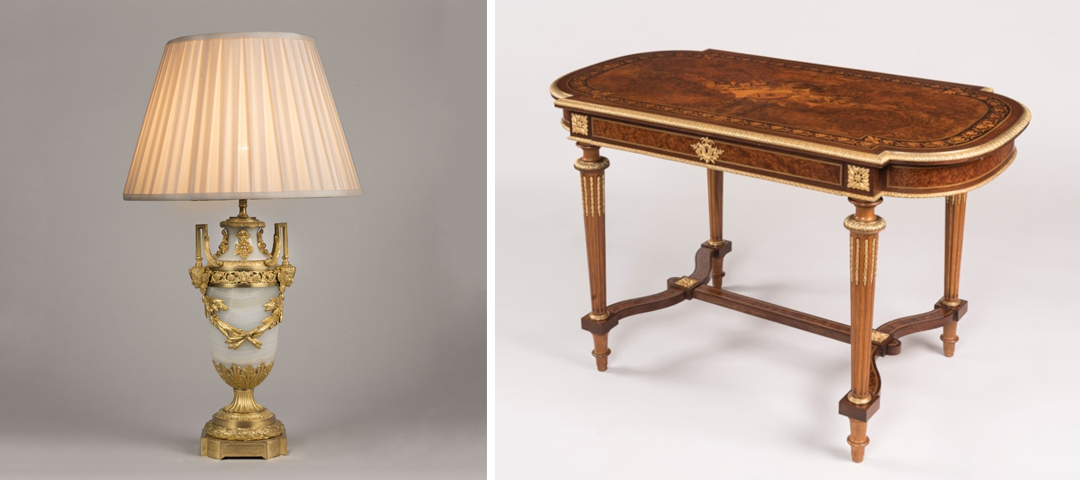
Image courtesy Butchoff London
Where AI May Actually Help the Trade
None of this means AI is irrelevant to the antiques industry. In many ways, technology is becoming deeply useful behind the scenes.
Image-recognition tools are beginning to assist with identifying makers’ marks, construction details, and stylistic similarities across large databases of objects and auction records. Research that once required extensive archival searching can now happen far more quickly. Translation tools and improved search capabilities are also making global discovery easier for both buyers and dealers.
There is growing interest as well in how AI may support provenance research and fraud detection by helping cross-reference historical documentation, ownership records, and visual databases more efficiently.
For dealers managing substantial inventories, these tools may ultimately create something surprisingly valuable: more time. Less time spent organizing systems. More time spent sourcing, researching, building relationships, and developing expertise.
That distinction is important because the antiques trade has never depended solely on information. It depends on interpretation.
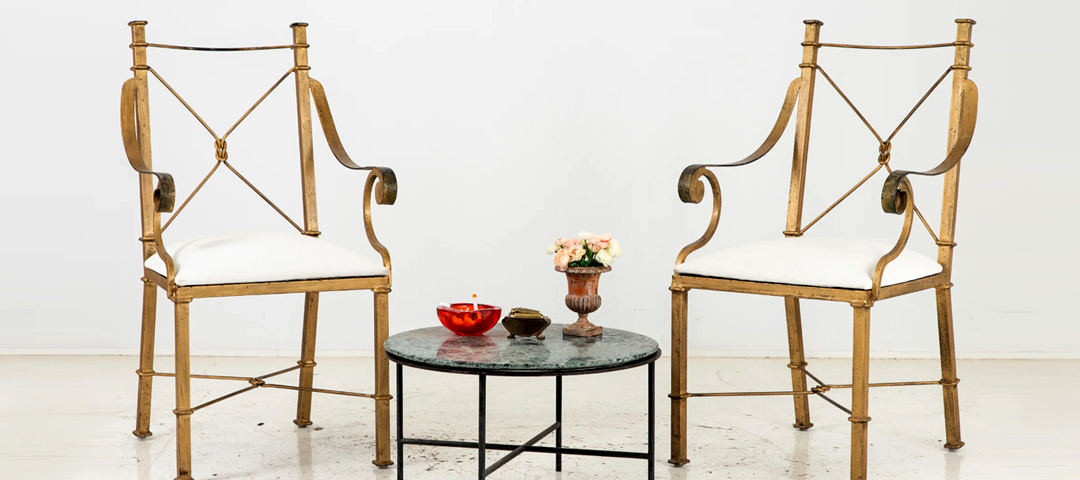
Image courtesy of Modern Antiquarian
Why Human Expertise Becomes More Valuable, Not Less
The rise of AI may ultimately increase the importance of connoisseurship rather than diminish it.
Because while technology can identify patterns, it cannot fully replicate discernment. Condition, scale, restoration quality, regional variation, craftsmanship, and historical context all influence how an object is understood. Two pieces may appear nearly identical digitally while carrying entirely different significance in person.
Collectors are not simply buying data. Designers are not simply sourcing by algorithm. Much of the value within antiques still lives in emotional response, trained instinct, and contextual understanding.
That feels especially important in a market increasingly shaped by synthetic imagery.
As more content online becomes generated, trust becomes more meaningful. Provenance becomes more meaningful. Human expertise becomes more meaningful. The dealer who recognizes subtle quality before the broader market catches up still matters. The designer who understands how to place a centuries-old object inside a contemporary interior still matters. The collector who responds to resonance rather than trend still matters.
If anything, those forms of knowledge may become more valuable in the years ahead precisely because they cannot be automated easily.
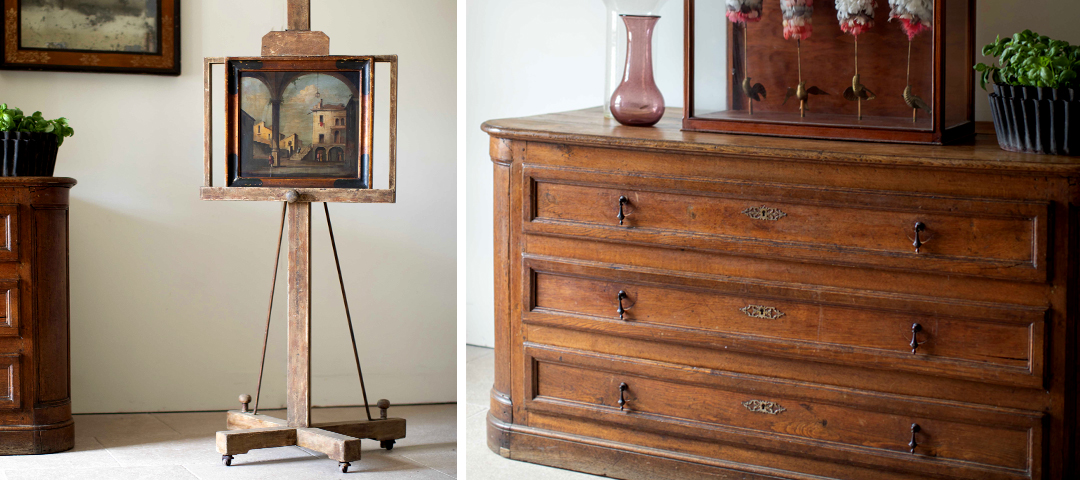
Image courtesy of Lorford’s
Looking Ahead
Technology will almost certainly continue reshaping the antiques industry. Research tools will improve. Search capabilities will become smarter. Digital marketplaces will continue evolving.
But the deeper appeal of antiques feels unlikely to disappear.
Because the more artificial environments become, the more people seem drawn toward objects that carry visible evidence of time, craftsmanship, and human presence.
That tension may ultimately define the next chapter of the antiques market.
Not a battle between technology and tradition, but a growing recognition that in an increasingly digital world, real objects carry a different kind of emotional weight.
And that may be exactly what makes them so valuable now.
Lead image courtesy of Lorford’s Antiques