

In the United States, fair season does not unfold along a single axis. It stretches across convention halls, hotel ballrooms, fairgrounds, and purpose-built venues, each reflecting the breadth of the American market.
What distinguishes the US landscape is not uniformity, but range — the varied events and venues that give it structure.
From concentrated buying environments to rigorously vetted fairs built on scholarship and institutional trust, the US circuit reflects a market shaped by access, momentum, and regional identity. Dealers, designers, and collectors move between these settings with intention, sourcing inventory, reinforcing relationships, and responding to shifts in demand.
Below is a guide to the fairs that continue to anchor sourcing, standards, and professional participation across the US.
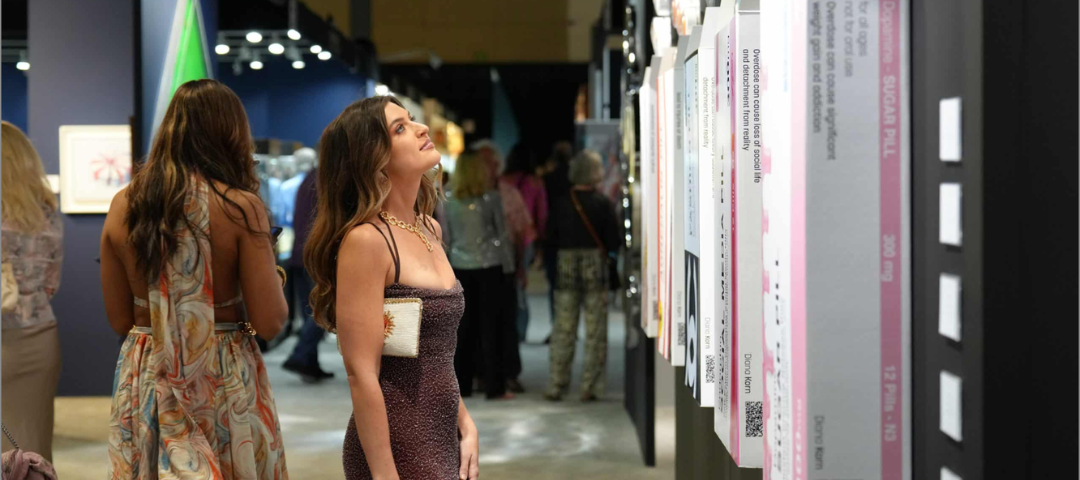
Image courtesy of The Palm Beach Show
Professional and Institutional Anchors
These fairs form the professional backbone of the US market. Whether shaped by formal vetting or by concentrated trade participation, they reinforce standards, clarify expectations, and set the tone for the year ahead.
The Winter Show — New York City
When: Winter | Location: New York City, New York
The Winter Show has built its reputation through consistency rather than spectacle. Long regarded as one of the most prestigious antiques fairs in the United States, it is known for its rigorous vetting, scholarly oversight, and a measured scale that encourages informed decision-making.
What sets The Winter Show apart is its balance of accessibility and authority. Collectors, designers, advisors, and institutions move through the fair with equal purpose, drawn by material that spans fine art, furniture, decorative arts, and design history. The pace favors conversation and comparison, making it a fair where relationships are reinforced as frequently as acquisitions are made.
Why it matters: institutional trust, scholarship, and consistency
Best for: collectors, designers, and advisors working at the higher end of the market
TEFAF New York — New York City
When: Spring | Location: New York City, New York
TEFAF New York brings the rigor and standards of TEFAF Maastricht into a more concentrated, market-facing format tailored to the US audience. While smaller in scale, the fair maintains the same emphasis on vetting, scholarship, and connoisseurship that define the TEFAF name, making it a trusted destination for institutions, advisors, and serious private collectors alike.
TEFAF New York combines scholarly standards with a focused, collector-driven environment. Museums and foundations attend alongside collectors and designers, creating an environment where academic credibility and acquisition coexist with active market engagement. For many in the trade, TEFAF New York functions as both an access point and a litmus test — a place to engage TEFAF-level material within the rhythms of the New York fair calendar, and to understand how global standards translate within the US market.
Why it matters: TEFAF-level standards within the US market, paired with collector accessibility
Best for: collectors, institutions, advisors, and designers seeking TEFAF-level objects in a serious environment
The Palm Beach Show — Florida
When: Winter | Location: Palm Beach County, Florida
More formal in tone, The Palm Beach Show occupies a polished corner of the US market, with an emphasis on fine art, antiques, and jewelry. It rewards unhurried exploration and measured decision-making, offering a clear contrast to faster-paced winter fairs.
Why it matters: formal presentation and strength in fine art, antiques, and jewelry
Best for: collectors and designers sourcing investment-level pieces
Original Miami Beach Antique Show — Florida
When: Winter | Location: Miami Beach, Florida
Miami’s role in the winter calendar is both practical and symbolic. The show’s international mix and strength in jewelry and collectibles make it a place to take the market’s temperature — to see what’s moving, what’s holding, and how global buyers are thinking as the season unfolds.
Why it matters: international perspective and market insight
Best for: buyers and dealers working across collectible categories
The Antiques & Garden Show — Tennessee
When: Winter | Location: Nashville, Tennessee
With its long history and emphasis on Americana and decorative arts, The Antiques & Garden Show continues to draw knowledgeable buyers who value regional depth and traditional forms. The show is also known for its robust program of talks and events, making it as much a place for learning and exchange as for sourcing.
Why it matters: leadership in American decorative arts and regional depth
Best for: dealers and designers sourcing Americana and classical decorative objects
The San Francisco Fall Show — California
When: Fall | Location: San Francisco, California
Long regarded as one of the most respected fairs on the West Coast, The San Francisco Fall Show brings a distinctly curated sensibility to antiques and decorative arts. Its emphasis on vetting, presentation, and scholarship attracts collectors and designers who value quality over volume.
The show’s charitable roots and museum-adjacent atmosphere contribute to a slower, more deliberate pace — one that encourages conversation, careful assessment, and long-term thinking rather than quick turnover.
Why it matters: West Coast anchor with strong curatorial standards
Best for: collectors and designers seeking refined, historically grounded material
Round Top Antiques Show — Texas
When: Winter, Spring, and Fall | Location: Between Austin and Houston, Texas
Round Top has evolved into one of the most concentrated sourcing environments in the US. Each season, established dealers, interior designers, and serious collectors converge across a coordinated network of independently run venues.
What distinguishes Round Top is not simply scale, but professional density. The Original Round Top Antiques Fair, Marburger Farm, The Compound, Blue Hills, The Halles, and Zapp Hall operate simultaneously, creating a marketplace that now commands national attention. For many in the trade, it functions as a strategic waypoint — a place to source deeply and reinforce long-standing relationships.
Why it matters: professional concentration and national influence
Best for: dealers and designers seeking scale with serious trade depth

Specialized Market Leaders
Some fairs operate within defined categories yet exert influence well beyond them. Whether through scholarship, trade concentration, or cultural reach, these events shape specific sectors of the market — and often ripple outward into interiors, collecting strategies, and pricing expectations across the broader trade.
Palm Springs Modernism Show — California
When: Winter | Location: Palm Springs, California
Dedicated to twentieth-century design, the Palm Springs Modernism Show offers a concentrated, dealer-driven selling floor anchored in mid-century furniture, modern lighting, studio ceramics, and postwar decorative arts.
Buyers arrive prepared. Inventory is presented within a focused modernist framework, encouraging deliberate rather than speculative purchasing.
Why it matters: curated authority in twentieth-century design
Best for: designers, dealers, and collectors specializing in modernist design
The Philadelphia Show — Pennsylvania
When: Spring | Location: Philadelphia, Pennsylvania
Long regarded as a serious destination for American art and decorative arts, The Philadelphia Show emphasizes connoisseurship and institutional credibility. With strength in American furniture, folk art, and works on paper, the fair draws collectors and museum-level buyers focused on scholarship and provenance.
While its scale is measured, its standards are decidedly not.
Why it matters: category leadership in American fine and decorative arts
Best for: collectors and dealers specializing in American material
Las Vegas Antique Jewelry & Watch Show — Nevada
When: Summer | Location: Las Vegas, Nevada
Anchoring the antique jewelry trade in the US, the Las Vegas Antique Jewelry & Watch Show functions as a concentrated marketplace for estate, period, and high-value jewelry. It draws serious trade buyers operating with margin, condition, and rarity in mind.
Unlike broader winter fairs, this environment is unapologetically category-specific, operating within a tightly defined segment of the antiques market.
Why it matters: national trade hub for antique and estate jewelry
Best for: jewelry dealers, specialists, and estate buyers
The Armory Show — New York
When: Fall | Location: New York City, New York
While primarily focused on modern and contemporary art, The Armory Show influences how art is positioned within interior spaces and how collectors think about scale, narrative, and visual impact.
Designers and advisors attending The Armory Show are often the same professionals sourcing antiques and vintage material elsewhere on the calendar. The fair’s influence lies less in direct antiques transactions and more in shaping aesthetic direction — color, material contrast, and collecting confidence.
Why it matters: crossover influence between art, design, and decorative collecting
Best for: designers and collectors working fluidly between art and historic material

What Defines the US Fair Landscape
The US market is not defined by a single flagship event. Its character emerges from the interplay between disciplined presentation and concentrated trade participation, regional identity and international reach, new collectors alongside established connoisseurs.
Dealers move fluidly across these environments, sourcing deeply in one venue and presenting strategically in another. Designers do the same, balancing aesthetic instinct with scholarship and provenance.
Approached intentionally, fair season remains one of the most effective tools in the vintage and antiques trade — not simply for buying and selling, but for understanding how the market is moving, what inventory is resonating, and where standards are being reinforced. This is why we publish our seasonal Guide to Trade Shows + Fairs in partnership with Antiques News & Fairs x The House Directory — to help dealers and designers approach the calendar with clarity, structure, and intention, rather than reaction.
The work does not stop when the aisles clear. In many ways, that is when the work truly begins.