
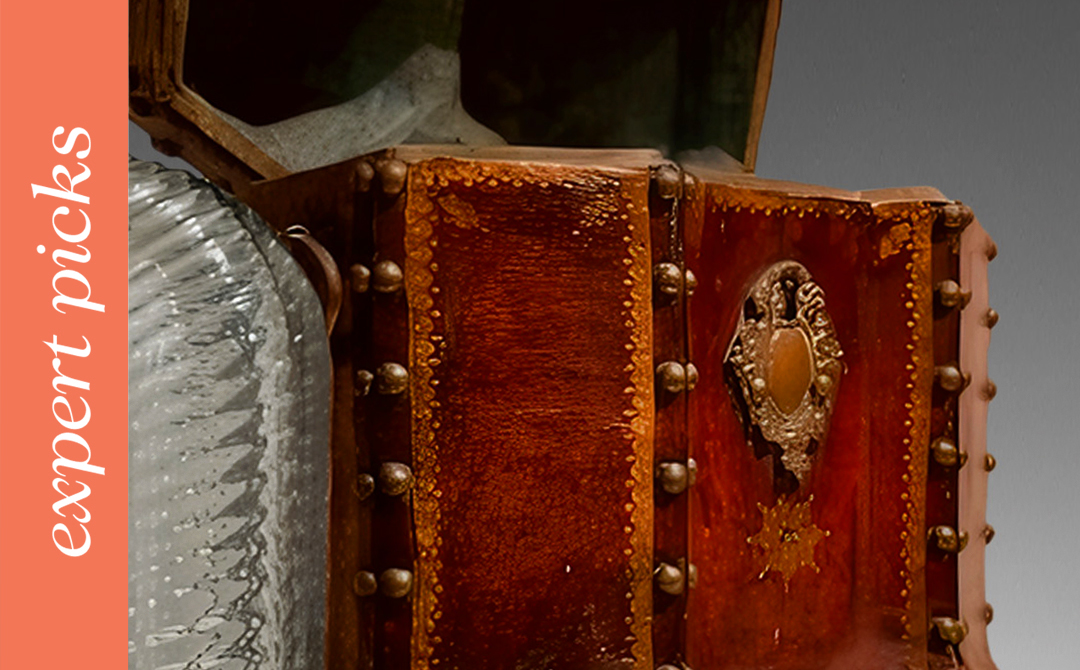

Each December, the AADLA x NAADA 12 Days of Christmas Virtual Art + Antiques Show offers a moment of pause amid the season’s rush. A chance to look closely, learn deeply, and reconnect with objects shaped by time, skill, and human touch. Powered by Incollect, the annual virtual fair brings together exceptional works presented by leading dealers across fine art, furniture, jewelry, and the decorative arts.
As the 2025 edition comes to a close, we’re reflecting on the pieces that lingered — works that spoke not only through beauty, but through cultural meaning, material mastery, and provenance. Below, we share six standout selections from this year’s show: a final round-up celebrating the breadth and depth of what the 12 Days of Christmas does best.
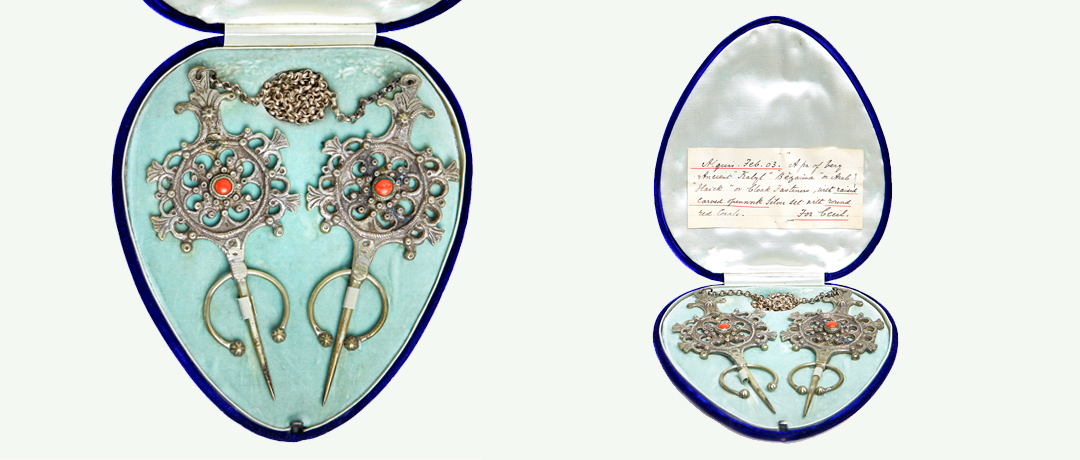
Cora Ginsberg — Woman’s Fibulae of Silver and Coral
Northern Algeria (Kabyle people, Atlas Mountains), mid- to late 19th century
These striking fibulae offer a powerful glimpse into the artistry and cultural traditions of the Kabyle people of Northern Algeria. Crafted in silver and set with coral, the pair reflects a long history of adornment that was both symbolic and functional — fibulae serving as essential fasteners for women’s garments while also communicating identity, status, and regional style.
Each fibula measures 6 1/4 by 2 5/8 inches, connected by a finely worked chain measuring 21 3/4 inches in length. The bold geometry and saturated coral create a commanding presence, balanced by meticulous metalwork that rewards close inspection.
Presented by Cora Ginsberg, whose scholarship in historic textiles and dress is internationally renowned, these fibulae embody adornment as cultural expression: objects worn, lived with, and passed down.
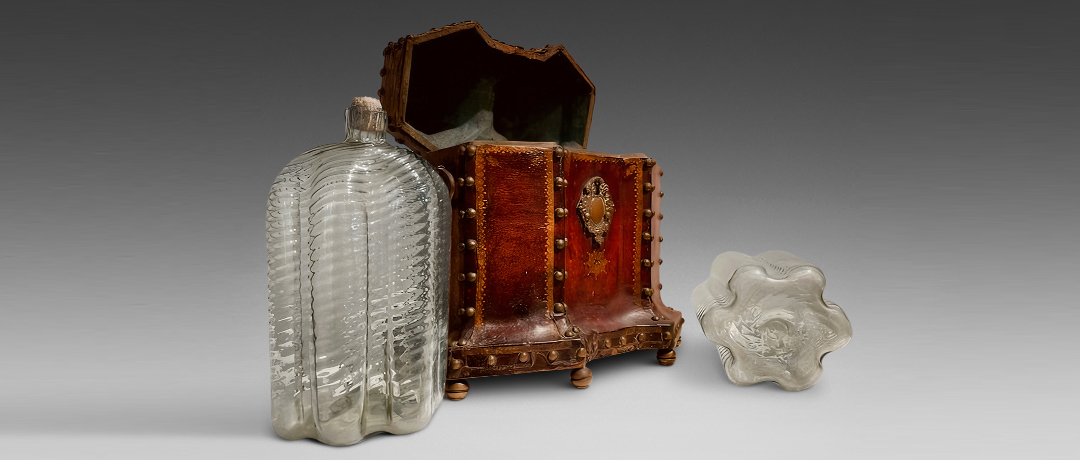
Engs-Dimitri Works of Art — Italian Wine Portabottiglie
Italy, 18th century
At once sculptural and convivial, this Italian wine portabottiglie transforms the act of transport into an object of refinement. The gilt and nail-head decorated leather case retains its two original lobed and swirled glass bottles, nestled within a fitted, textile-lined interior.
Standing 12 inches high, the piece reflects the elegance with which 18th-century Italian artisans approached even the most utilitarian forms. Designed to protect and present wine, it speaks to a culture where hospitality, craftsmanship, and daily ritual were deeply intertwined.
Offered by Engs-Dimitri Works of Art, the portabottiglie feels especially fitting for the season — a reminder that antiques often live at the center of shared rituals.
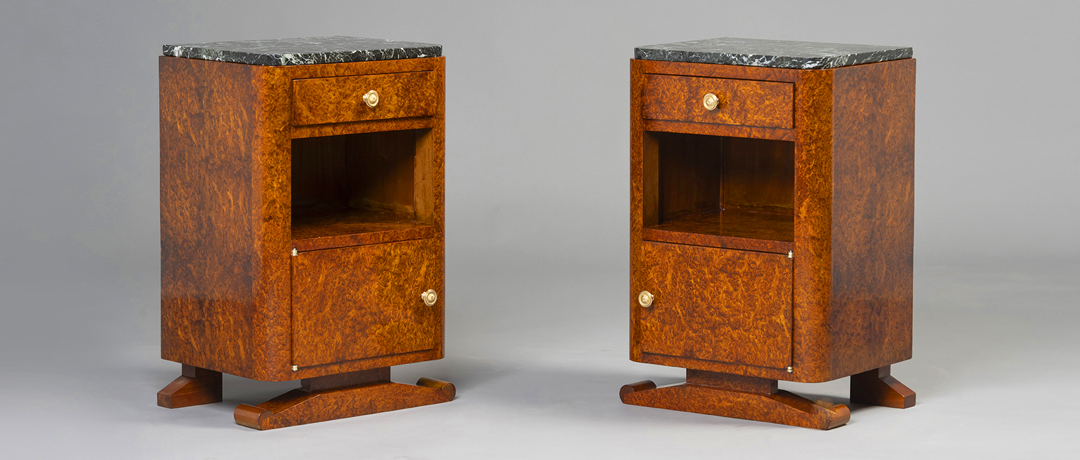
ILIAD New York — Art Deco Nightstands
France, circa 1930
This matched pair of Art Deco nightstands exemplifies the refined modernism of early 20th-century French design. Executed in amboyna veneer with marble tops and cast brass pulls, the pair is attributed to the manner of Jules Leleu, whose work defined the era’s sophisticated balance of form and luxury.
Measuring 25.5 inches high by 17.5 inches wide and 13 inches deep, the nightstands combine architectural clarity with richly figured wood to create pieces that feel both purposeful and indulgent.
Presented by ILIAD New York, the pair captures Art Deco’s enduring appeal: timeless proportions, exquisite materials, and a quiet confidence that continues to resonate in contemporary interiors.

Philip Colleck, Ltd — Four-Panel Dutch Leather Screen
Circa 1850
This exceptional four-panel Dutch leather screen is a triumph of surface, scale, and storytelling. Each arched panel is richly painted in polychrome oil with allegorical figures representing wind and water, surrounded by rockwork, flora, and fauna set against a tooled gilt ground. Gold leather borders and nail-head detailing frame each panel, while the reverse features a floral motif.
The screen stands 80 inches high, with each panel measuring 21 1/2 inches wide, creating an overall width of 86 inches when fully extended. Both decorative and architectural, it was designed to shape space while enveloping a room in color and narrative.
Offered by Philip Colleck, Ltd, the screen is a reminder that historic interiors were immersive environments, where the walls themselves could move, divide, and delight.
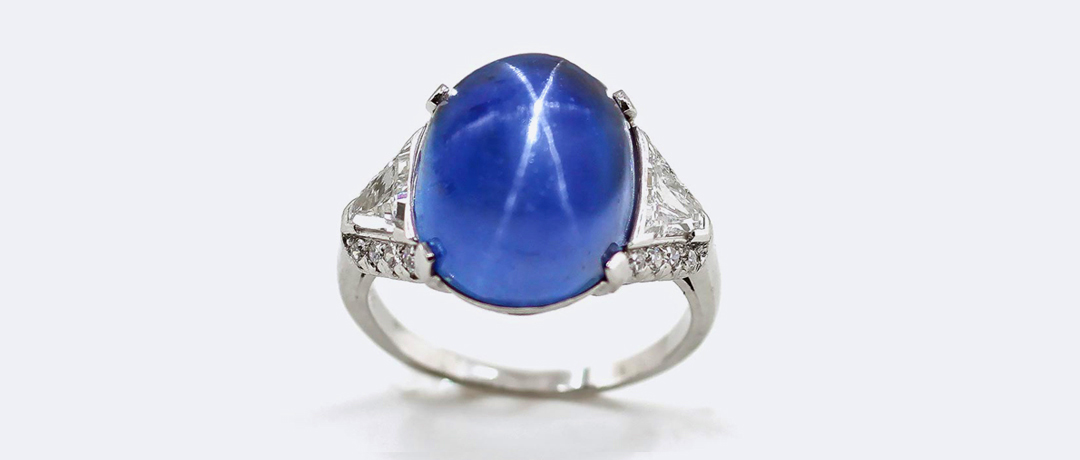
S.J. Shrubsole — Star Sapphire and Diamond Ring
Philadelphia, circa 1930, by J. E. Caldwell
Anchored by a luminous 15-carat star sapphire, this Art Deco ring exemplifies early 20th-century American jewelry at its finest. Crafted by J. E. Caldwell, one of Philadelphia’s most celebrated jewelers, the ring pairs the sapphire’s celestial phenomenon with carefully placed diamonds that enhance, rather than compete with, the stone’s presence.
The result is a composition that feels both bold and restrained — a hallmark of the period’s best work. Offered at $14,500, the ring carries not only material value, but the legacy of a distinguished American jewelry house.
Presented by S.J. Shrubsole, the piece is an intimate reminder of how exceptional jewels transcend eras, waiting patiently for their next steward.

William Vareika Fine Arts — Schooner Louisa Morrison, Probably in San Francisco Bay
Painted with a mariner’s understanding of wind, water, and movement, this work depicts the schooner Louisa Morrison under sail. Built around 1868 in Coos Bay, Oregon by John Howlett for Morgan & Company, the vessel was used to transport oysters from the Pacific Northwest to the San Francisco area.
The Louisa Morrison was lost during an 1878 voyage from San Francisco to Wilmington, California, and onward to Mazatlán, Mexico, lending to the painting a quiet poignancy. Rendered with careful attention to rigging, sea conditions, and atmosphere, the work captures both the romance and the realities of 19th-century maritime trade.
Offered by William Vareika Fine Arts, the painting stands as a tribute to a working vessel and the histories carried across American waters.
About the 12 Days of Christmas Virtual Art + Antiques Show
Presented by the Antique and Art Dealers Association of America (AADLA) and the National Antique & Art Dealers Association of America (NAADA), the 12 Days of Christmas Virtual Art + Antiques Show has become a cherished annual tradition. Powered by Incollect, the show brings together vetted dealers and museum-quality works across disciplines — offering collectors a thoughtful, scholarly, and accessible way to discover exceptional objects.
The 2025 edition continued that legacy, proving once again that meaningful discovery doesn’t depend on a convention hall — only on curiosity and care.
Explore the full presentation at: https://www.incollect.com/twelvedays2025