

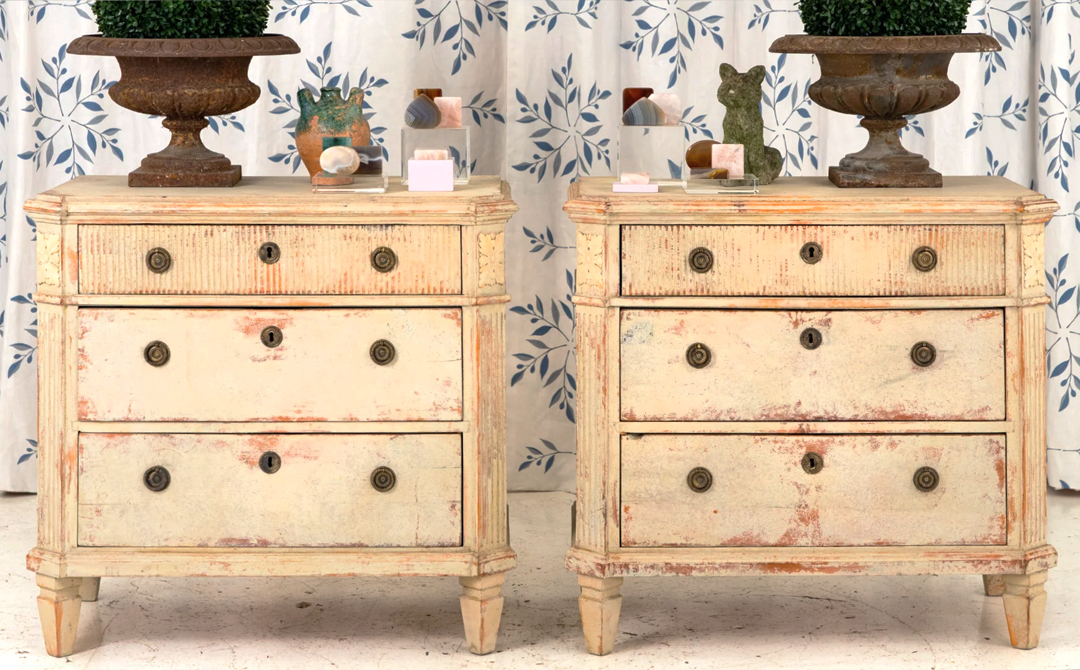
For decades, Scandinavian design has been shorthand for a particular kind of interior: pale woods, clean lines, minimal ornamentation, whitewashed surfaces. It is an image so familiar that it can obscure just how varied the furniture traditions of Sweden, Denmark, Finland, and Norway actually are.
Look at the interiors appearing in design publications now, and a more interesting version of Scandinavian design is coming into focus. Swedish Gustavian furniture is appearing alongside contemporary art. Danish modern chairs are being paired with antique tables. Early twentieth-century Swedish pieces are moving between highly traditional rooms and decidedly modern ones with ease.
In 2025, Architectural Digest went so far as to declare that “Swedish Antiques Are Having a Moment.” The magazine pointed to growing interest in designers including Axel Einar Hjorth, Josef Frank, and Gunnar Asplund, as well as the broader Swedish Grace movement. In the same piece, New York gallery Hostler Burrows told AD it had seen increased interest in Swedish furniture, particularly because of how easily these pieces work alongside both contemporary and vintage design.
The timing makes sense. As interiors become warmer, more personal, and more willing to mix centuries, Scandinavian antiques occupy an unusually useful middle ground. They offer the clarity we associate with modern design while carrying the craftsmanship, patina, and individuality that only age can provide.
The Warmth Behind the Restraint
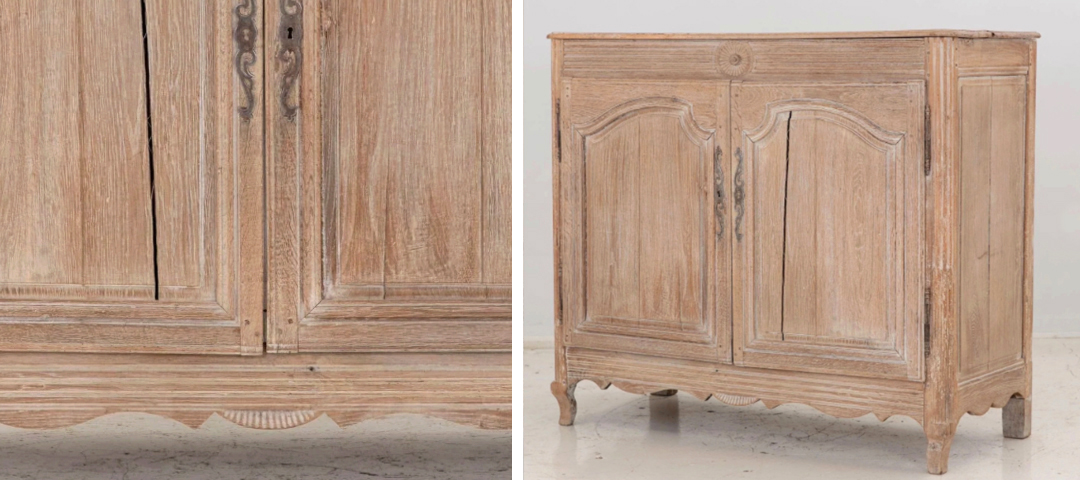
The simplicity of Scandinavian furniture shouldn’t be confused with austerity. Many of the pieces drawing attention today are compelling because their restraint puts greater emphasis on proportion, material, construction, and touch. While a Danish chair might be spare in form, its construction reveals exquisite attention to joinery, grain, and the way it supports the body.
That distinction feels especially relevant in a design climate increasingly interested in things that show evidence of making and use.
In its 2025 interiors forecast, Livingetc identified both growing demand for vintage and antique pieces and a renewed appreciation for traditional craft. The magazine connected that interest to a broader rejection of short-lived, mass-manufactured objects in favor of furniture with patina, history, and visible evidence of how it was made. That is territory Scandinavian antiques know well.
Even contemporary Nordic designers are returning to older furniture traditions for inspiration. Reporting from Stockholm Design Week in 2025, Wallpaper* highlighted a collection by Bernadotte & Kylberg inspired by Swedish vernacular family furniture, noting the warmth of the forms and their connection to everyday domestic life.
The appeal is not ornament for ornament’s sake. It is character created through proportion, craftsmanship, natural materials, and time.
Furniture That Knows How to Mix
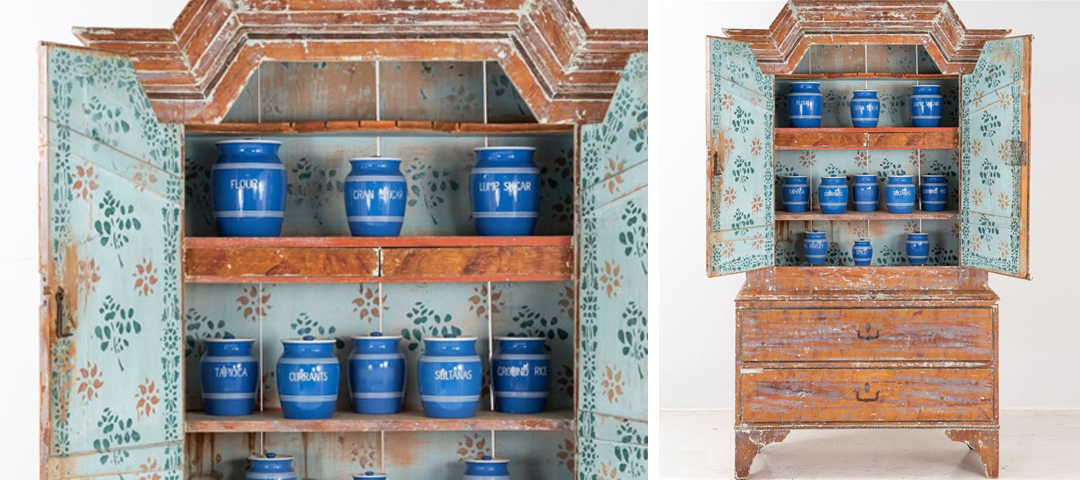
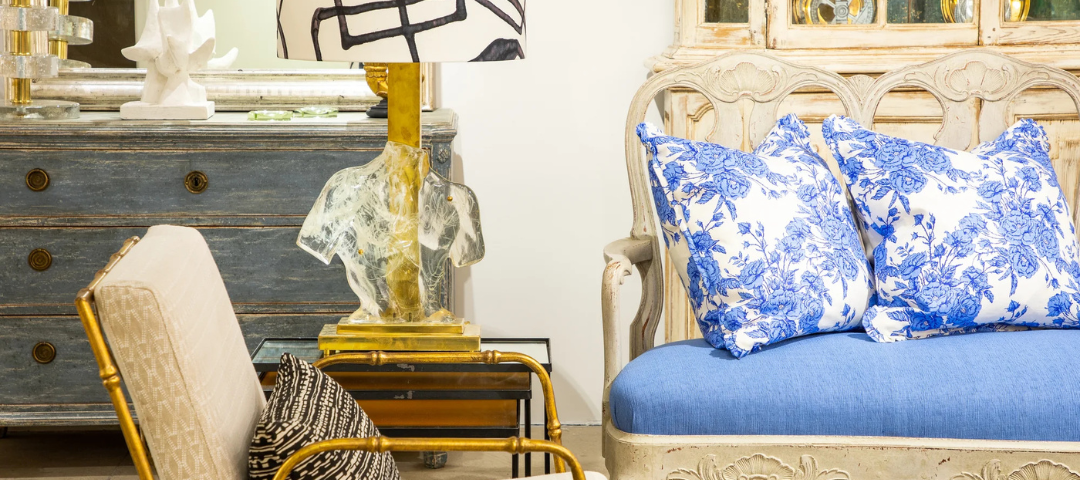
Perhaps the most important reason Scandinavian antiques feel so suited to the present moment is their ability to live outside their own period. The most interesting rooms today don’t want every piece of furniture to tell the same historical story. Designers are combining eighteenth-century furniture with twentieth-century lighting, contemporary upholstery with inherited pieces, and museum-quality pieces with items found at the local flea market.
This tension between periods is often what gives a room its character. Interior designer Joy Moyler, speaking to Veranda about the antiques she considers worth collecting, described her appreciation for “ornate, well-detailed pieces, whether used in a traditional or modern environment,” adding that they introduce “a bit of tension in the room.” The principle applies just as readily to Scandinavian furniture, even when the forms themselves are more restrained.
An old piece does not need to match its surroundings to belong. Livingetc recently described this changing approach to transitional interiors as one built around confidently mixing eras rather than buying matching suites. Craftsmanship becomes the connecting thread
Scandinavian furniture is particularly adept at this kind of conversation. In an 18th-century Connecticut house featured by House & Garden, designer Kari McCabe and architect Nate McBride furnished the rooms largely with pieces collected over time. Scandinavian armchairs inherited from McCabe’s grandparents sit alongside vintage Saarinen tables, estate-sale furniture, and the architecture of a much older American house. The result does not read as Scandinavian, midcentury, or early American. It reads as collected.
The same quality appears in 1stDibs Introspective‘s 2025 profile of designer Frances Merrill. In one richly decorated dining room, a prized midcentury Swedish table and cane-seated teak chairs introduce an informal counterpoint to botanical grasscloth and expressive lighting.
This may be the particular gift of Scandinavian antiques. Their forms are distinctive without being domineering. They can establish a point of view while leaving enough room for everything around them to have one, too.
Beyond Danish Modern
For collectors and designers, the renewed interest also offers a reason to look beyond the handful of names most commonly associated with Scandinavian furniture. Danish modernism remains enormously influential, but Scandinavian design history extends much further in both directions.
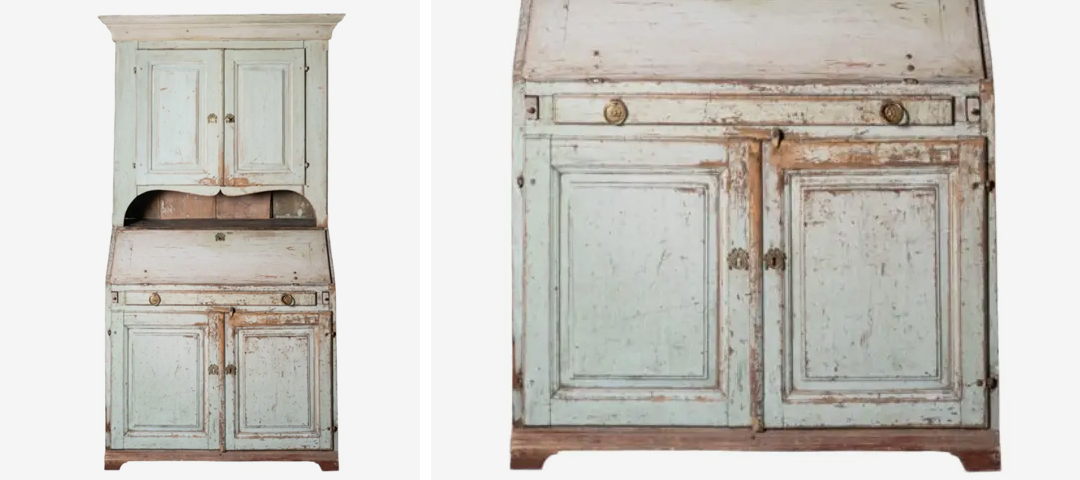
Eighteenth-century Swedish Gustavian furniture translated French Neoclassicism into something lighter and more restrained. Swedish Grace, flourishing in the early twentieth century, brought classical references into dialogue with modern ideas about simplicity and function. Designers such as Axel Einar Hjorth, Gunnar Asplund, Josef Frank, Kaare Klint, Finn Juhl, and Hans Wegner each approached furniture from markedly different positions.
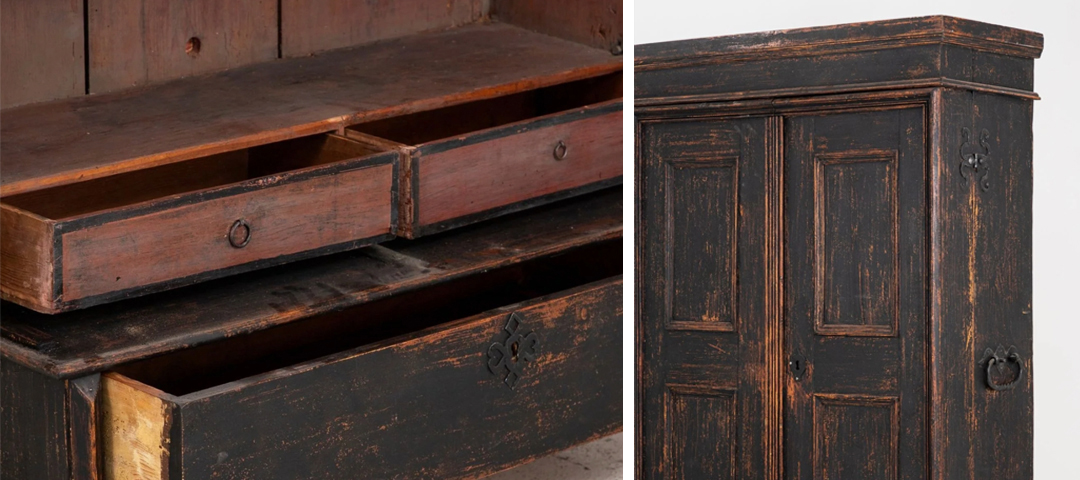
The market is beginning to reflect that breadth. Veranda‘s 2025 antiques forecast included Gustavian furniture among the year’s significant antiques trends. In its 2026 forecast, the magazine reported that Swedish casegoods from the Gustavian and Rococo periods had become some of the most coveted pieces in the antiques market, while noting a growing appetite for examples in moodier, darker finishes.
That evolution is telling. The attraction is no longer confined to a prescribed palette of pale painted furniture and blond wood. Buyers are responding to Scandinavian design as a collecting category rather than simply an aesthetic.
A Different Kind of Modernity
There is a useful paradox at the center of all this. Scandinavian antiques can make a room feel more modern precisely because they prevent it from feeling newly decorated. Consider a nineteenth-century Swedish table, a Gustavian chest, or an early twentieth-century armchair. Each introduces age and specificity, yet their disciplined proportions can sit comfortably beside contemporary furniture.
That may explain why Swedish pieces are showing up in increasingly expressive interiors. When Domino visited Swedish fashion entrepreneur Petra Tungården’s Stockholm apartment in 2025, the rooms were anything but the stereotypical monochromatic Scandinavian interior. Vintage chairs, secondhand lighting, strong marble, blue walls, contemporary pieces, and objects found at markets coexist throughout the apartment. Tungården described secondhand lighting as one of her great passions, and the resulting rooms feel personal rather than stylistically obedient.
Similarly, a Swedish summer house featured by House & Garden in 2025 was furnished almost entirely with vintage finds from local flea markets, then animated with textiles and upholstery. “Only the beds are new,” textile designer Cathy Nordström told the magazine.
This is Scandinavian design far removed from the idea of an immaculate showroom. It is layered, colorful, practical, and accumulated over time.
As Interest Grows, Knowledge Matters More
Popularity inevitably brings another consideration: attribution. The cleaner the form, the easier it can be to assume that one Scandinavian-looking piece is much like another. For dealers and collectors, that makes connoisseurship increasingly valuable.
A 2026 Veranda examination of Gustavian furniture addressed precisely this issue. Decorative arts expert Michael Diaz-Griffith cautioned that the quantity of furniture currently described as eighteenth-century Gustavian far exceeds what could plausibly have survived from the period. Construction, hardware, surfaces, alterations, provenance, and signs of genuine age all become important parts of understanding what a piece actually is. The more particular antiques are sought after, the more valuable expertise becomes.
The best Scandinavian antiques reward that knowledge. The difference between an original period piece, a later interpretation, an attributed work, and a modern reproduction can carry implications for history, rarity, and value. For dealers, that creates an opportunity to tell richer stories about the objects they source. For designers, it makes a trusted specialist especially valuable. And for collectors, learning to recognize the distinctions is part of the pleasure.
Old Pieces for New Rooms
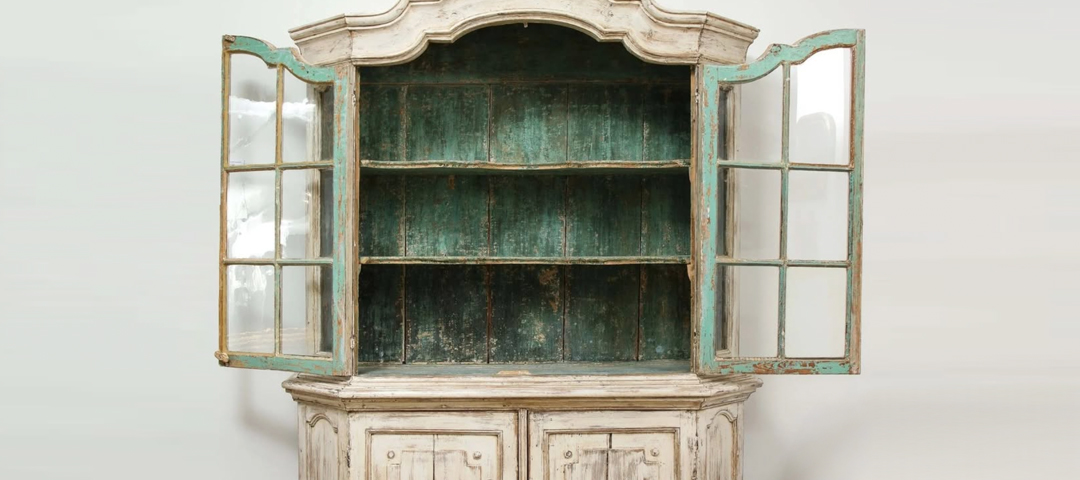
Scandinavian antiques feel current because so many of the qualities shaping interiors now were embedded in them from the beginning. Good materials, thoughtful construction, comfort, proportion … furniture intended to live with people rather than simply occupy a room. Their restraint gives designers freedom, their craftsmanship gives rooms substance, and their age introduces the irregularity and character increasingly absent from mass-produced interiors.
And they rarely require allegiance to a single decorating style. A Gustavian chest can enter a contemporary bedroom. A Danish chair can sit at an English table. A Swedish cabinet can hold its own beneath modern art. That flexibility is what makes them modern.
The renewed interest in Scandinavian antiques goes beyond the familiar idea of “Scandi style.” It’s an appreciation for furniture that can move between periods and aesthetics while retaining its own identity.
In rooms increasingly built around that kind of dialogue, these pieces feel remarkably at home.
Images courtesy of Modern Antiquarian.